


Rise in cases of chikungunya and other mosquito-borne diseases: let’s stay vigilant—the season isn’t over yet!
cp_arboviroses_20250917-vf.pdf
Download (PDF - 229.85 KB)
Press Contacts
Health Crisis Center, Ministry of Health:
alertes-presse@sante.gouv.fr
Public Health France:
presse@santepubliquefrance.fr
Since the spring of 2025, French health authorities have observed a sharp increase in arboviruses in mainland France, marked by an uptick in the circulation of chikungunya and dengue.
A significant number of people infected locally by mosquitoes carrying these viruses have been identified, including in areas that had previously been spared.
484 cases of local transmission (autochthonous cases) of chikungunya have been reported, some for the first time in new regions.
21 cases of local dengue transmission have been observed.
The West Nile virus has also appeared for the first time in new regions, with 32 autochthonous cases reported.
In this unprecedented situation in mainland France, health authorities are reminding everyone of their role in protecting themselves from bites and limiting the proliferation of mosquitoes:
Wear long, loose-fitting clothing;
Use skin repellents;
Install mosquito nets;
Eliminate breeding sites by removing standing water inside and around homes (under flower pots, tarps, trash, gutters, etc.).
Guidelines for travelers
With the return from summer vacations, an increase in the circulation of chikungunya in areas already affected and its spread to regions previously relatively spared—particularly the Caribbean and French Guiana—is possible.
Therefore, people traveling to a risk area are asked to protect themselves against mosquito bites during their stay and for up to three weeks after their return, to prevent transmission of the disease to their loved ones. In addition to tropical areas (Reunion, Mayotte, South America, the Caribbean), several metropolitan regions are experiencing increased circulation of arboviruses (South, Grand Est, Burgundy-Franche-Comté, Centre-Val de Loire, Île-de-France, Auvergne-Rhône-Alpes).
If you experience symptoms after a mosquito bite (joint or muscle pain, headache, rash, conjunctivitis, with or without fever), it is important to see a doctor immediately, specifying, if applicable, that you have been in a high-risk area.
To limit the risk of these viruses spreading between regions, travelers heading to the French West Indies and French Guiana—areas that have so far been less affected by chikungunya but where the mosquitoes that transmit the disease are present year-round—are asked to exercise particular caution.
Reminder: The tiger mosquito is present in 84% of mainland France
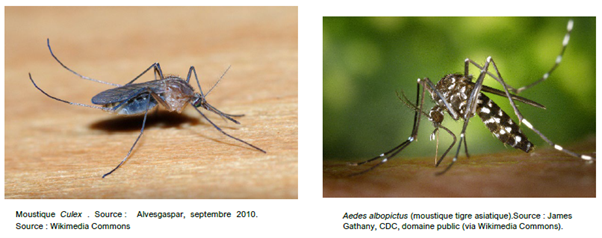
The Aedes albopictus mosquito, capable of transmitting the chikungunya and dengue viruses, is currently established in 81 metropolitan departments, representing 84% of the territory, facilitating the local spread of arboviruses.
In light of the increased circulation of chikungunya and dengue and the growing presence of the tiger mosquito in mainland France, health authorities are calling for continued high levels of individual and collective vigilance.
The Culex mosquito, a vector of the West Nile virus, is also present throughout mainland France. To date, 32 locally acquired human cases of West Nile virus transmitted by this mosquito have been identified in mainland France this year in the Provence-Alpes-Côte d’Azur and Occitanie regions and, for the first time, in the Île-de-France and Auvergne-Rhône-Alpes regions.

Data as of November 26, 2025
Chikungunya, Dengue, Zika, and West Nile - Surveillance Data in France in 2025
Our latest news

news
Shamonda Virus: First Human Case Detected in France—What Do We Know?

news
Call for Nominations for the Renewal of the Scientific Advisory Board of the...

news












