
thematic dossier




Santé publique France has released updated surveillance data on hepatitis B and C, which show that the number of people with chronic hepatitis C stabilized in 2019, while the number of people with chronic hepatitis B has been steadily increasing.
thematic dossier
The World Health Organization (WHO) has set a global goal of eliminating hepatitis B virus (HBV) and hepatitis C virus (HCV) by 2030. France has committed to eliminating hepatitis C by 2025 by intensifying prevention and screening efforts targeting the most at-risk populations and by improving access to care and treatment for hepatitis C.
To provide data to help evaluate the measures implemented, Santé publique France publishes, as it does every year, an update on epidemiological indicators for hepatitis B and C, including:
Hepatitis B and C screening activity in 2019 in private-sector laboratories (Hepatitis B screening; Hepatitis C screening);
Individuals with long-term illnesses (ALD) due to chronic hepatitis C or chronic hepatitis B (all beneficiaries as of 12/31/2019 and new beneficiaries during 2019) (ALD Hepatitis B; ALD Hepatitis C);
New diagnoses of acute hepatitis B subject to mandatory reporting in 2019 (Mandatory Reporting of Acute Hepatitis B).
The increase in screening for anti-HCV antibodies (Ab) for the hepatitis C virus and HBs antigen (Ag) for the hepatitis B virus, observed since 2010 in the private sector, continues and is intensifying slightly:
+9% increase in the number of people screened for anti-HCV antibodies between 2018 and 2019, representing 3.7 million people who underwent 4.3 million tests in 2019;
+12% increase in the number of people screened for HBsAg between 2018 and 2019, representing 3.8 million people who underwent 4.5 million tests in 2019.
Epidemiological indicators at the regional or departmental level are available on Géodes; under “Pathology,” click on H>Hepatitis B or Hepatitis D.
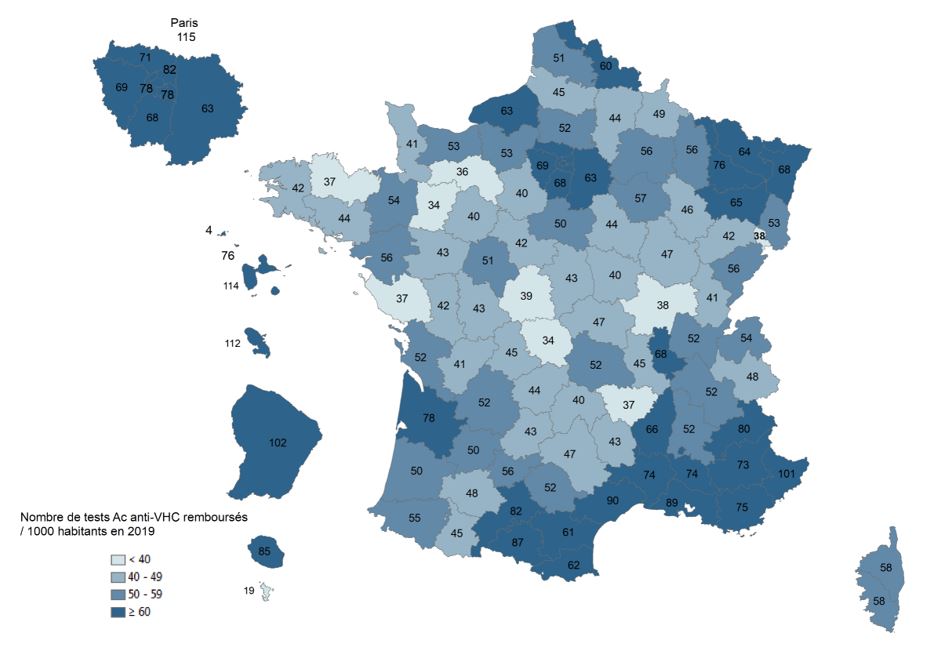
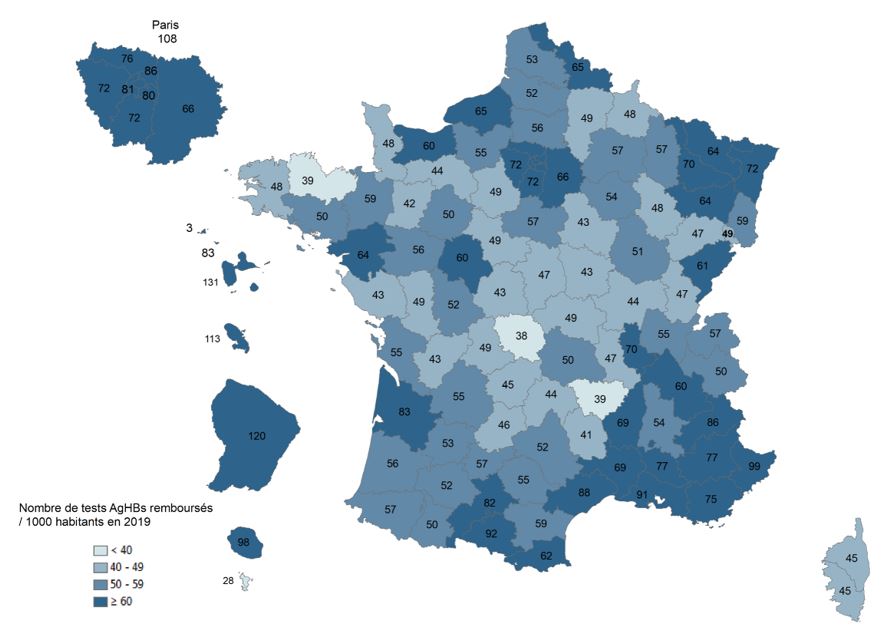
With regard to medical coverage, after declining between 2012 and 2016, the number of people covered under the ALD program for chronic hepatitis C has remained relatively stable since 2016 (79,644 people as of December 31, 2019, data from all health insurance plans). The number of new beneficiaries of this ALD, after an increase since 2014—particularly marked in 2016 and 2017—declined in 2018 and 2019 (7,207 new beneficiaries in 2019).
The number of beneficiaries of the ALD for chronic hepatitis B has been steadily increasing since 2010, reaching 36,180 as of December 31, 2019 (data from all health insurance schemes). The number of new beneficiaries, which has been rising since 2010, stood at 5,482 in 2019.
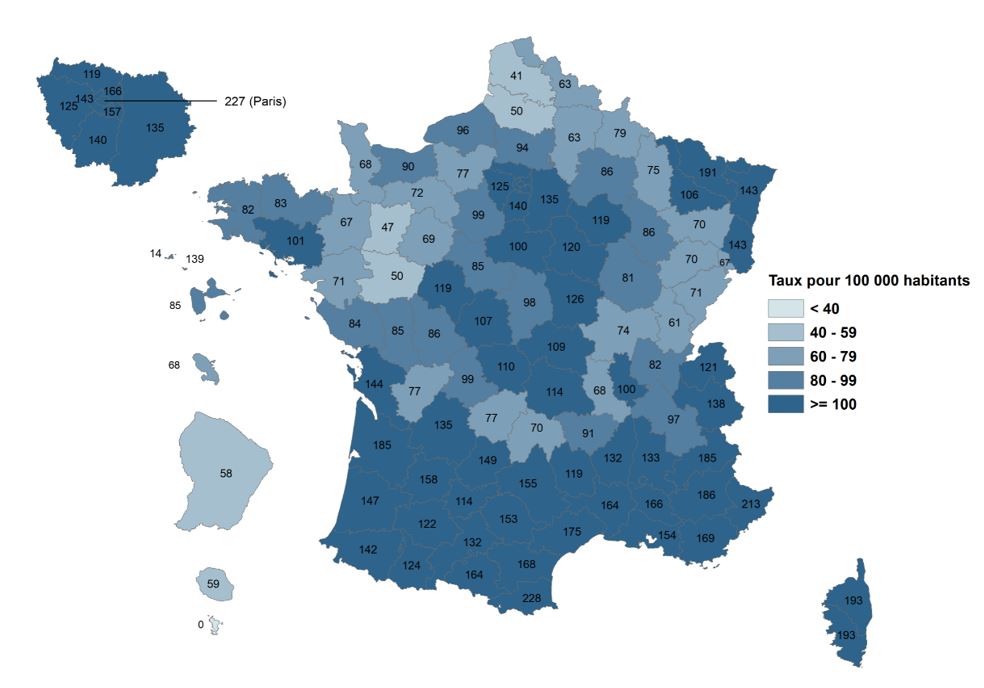
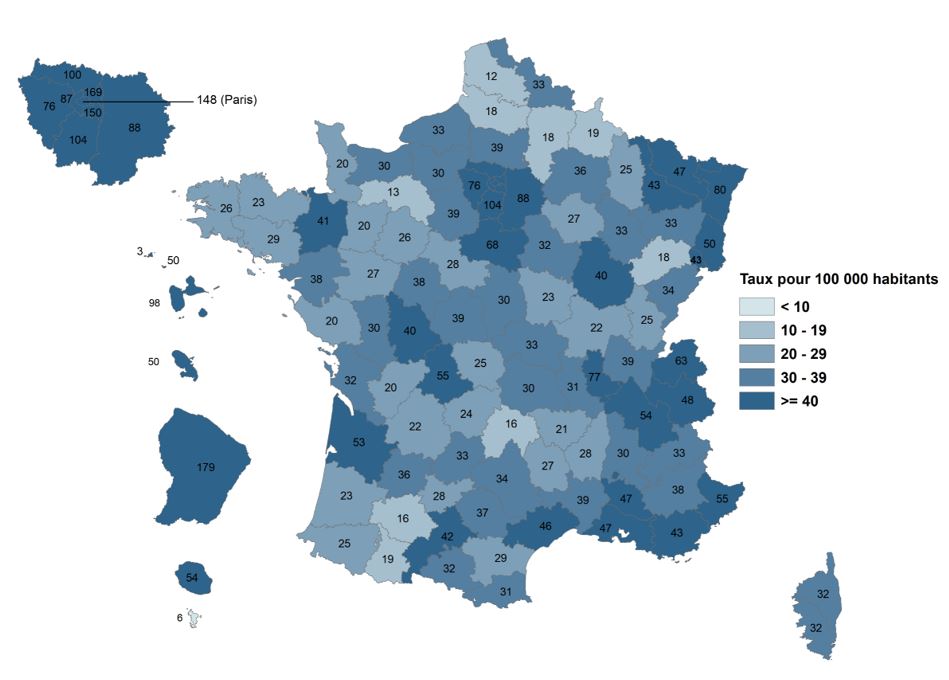
To move toward the World Health Organization’s goal of eliminating hepatitis B and C, diagnosing people infected with these viruses is essential to ensure they receive care and access to treatment. In this regard, the ongoing and intensifying efforts to screen for hepatitis B and C viruses in France represent a positive development.
Regarding hepatitis C, direct-acting antivirals (DAAs), available since 2014, make it possible to cure nearly all people with chronic hepatitis C and reduce their risk of complications and death. The sharp increase in the number of new ALD beneficiaries for chronic hepatitis C in 2016–2017 mirrors the rise in the number of patients treated with DAA during those years, thanks to the expansion of access to these new treatments for all patients. However, the fact that the number of new ALD beneficiaries decreased in 2018 and 2019 suggests that the number of patients diagnosed and requiring treatment is declining. This should encourage better targeting of hepatitis C screening toward the most at-risk populations in order to diagnose and treat people with undiagnosed chronic hepatitis C.
Regarding hepatitis B, the increase in the number of new ALD beneficiaries also suggests a higher number of patients treated each year, which could be linked to increased screening activity.
Hepatitis refers to diseases of the liver. They are most often caused by a viral infection or have a toxic origin (alcohol and certain medications).
Viral hepatitis is classified from A to E based on the family of the virus involved. Their main common feature is their ability to infect liver cells and multiply within them. In response to this infection, the host’s immune system reacts, leading to the destruction of infected cells and inflammation (hepatitis). Symptoms of hepatitis include yellowing of the skin and eyes (jaundice), dark urine, extreme fatigue, nausea or vomiting, and abdominal pain.
Vaccination is the most effective means of preventing hepatitis B.
This data update supplements the information published in the BEH thematic issue on hepatitis B and C released on November 24, 2020 (BEH: Screening and Management of Hepatitis B and C and Their Complications).

thematic dossier

thematic dossier
Hepatitis C is a viral infection primarily transmitted through blood. Screening for the disease is crucial to ensuring that infected individuals receive the treatments that can now lead to a cure.
What are vaccines for? How do they work? At what age should children be vaccinated? Vaccination-info-service.fr answers the most frequently asked questions about vaccination. A separate...












