


Surveillance of bacterial antibiotic resistance in outpatient care and long-term care facilities. PRIMO Project. 2020
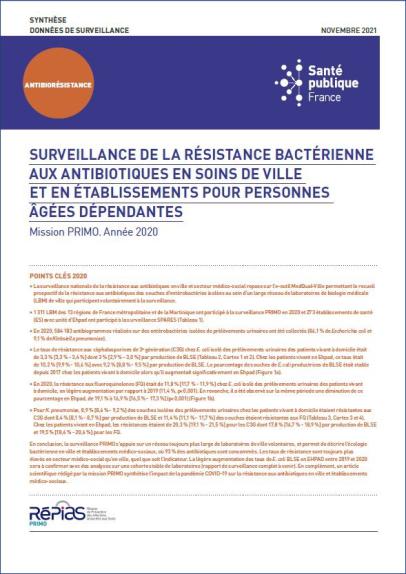
The national surveillance of antibiotic resistance in community and healthcare settings relies on the MedQual-Ville e-tool, which enables the prospective collection of data on antibiotic resistance in Enterobacteriaceae strains isolated within a broad network of community clinical laboratories (LBMs) that voluntarily participate in the surveillance program; 1,311 CLS from the 13 regions of mainland France and Martinique participated in the PRIMO surveillance program in 2020, and 273 healthcare facilities (HF) with long-term care units participated in the SPARES surveillance program; In 2020, 584,183 antibiotic susceptibility tests performed on Enterobacteriaceae isolated from urine samples were collected (86.1% Escherichia coli and 9.1% Klebsiella pneumoniae). The PRIMO surveillance program relies on an ever-expanding network of volunteer community laboratories and provides insights into the bacterial ecology in urban areas and long-term care facilities, where 93% of antibiotics are consumed. Resistance rates are consistently higher in healthcare and social care settings than in community settings, regardless of the indicator. The slight increase in rates of ESBL-producing E. coli in nursing homes between 2019 and 2020 will need to be confirmed through analyses of a stable cohort of laboratories (full surveillance report forthcoming).
Author(s): Lemenand Olivier, Thibaut-Jovelin Sonia, Coeffic Thomas, Caillon Jocelyne
Publishing year: 2021
Pages: 10 p.
Collection: Studies and Surveys
In relation to
Our latest news

news
Growing Up with Screens. A special report in *La Santé en action* No. 474,...

news
Seniors, pregnant women, and nursing home staff: What is the status of their...

news












