



Data
The system for evaluating screening and monitoring mandatory reporting of lead poisoning makes it possible to track trends in this issue.
Data from screening surveillance and mandatory reporting
At the national level
In 2020, 4,182 blood lead tests were ordered for children aged 0 to 17 in France. Screening activity in 2020 decreased by 50% compared to 2019 (8,293 blood lead tests) and by 42% compared to 2018 (7,182 blood lead tests). This decline in screening activity was particularly pronounced during the first lockdown (three times fewer blood lead tests performed in March and six times fewer in April compared to 2018), and remained below normal levels throughout 2020.
Number of monthly blood lead tests conducted in France between 2018 and 2020, SNSPE
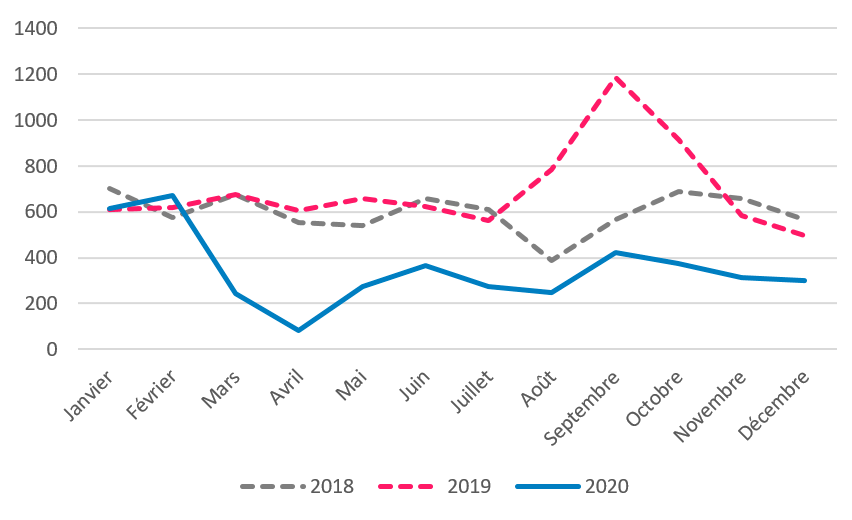
Initial screening blood lead tests (children tested for the first time) accounted for 71% of all blood lead tests ordered in 2020, a rate comparable to that of 2018. As a reminder, the increase in testing observed from June to September 2019 was primarily due to blood lead level tests conducted following the fire at Notre-Dame de Paris (n=1,250).
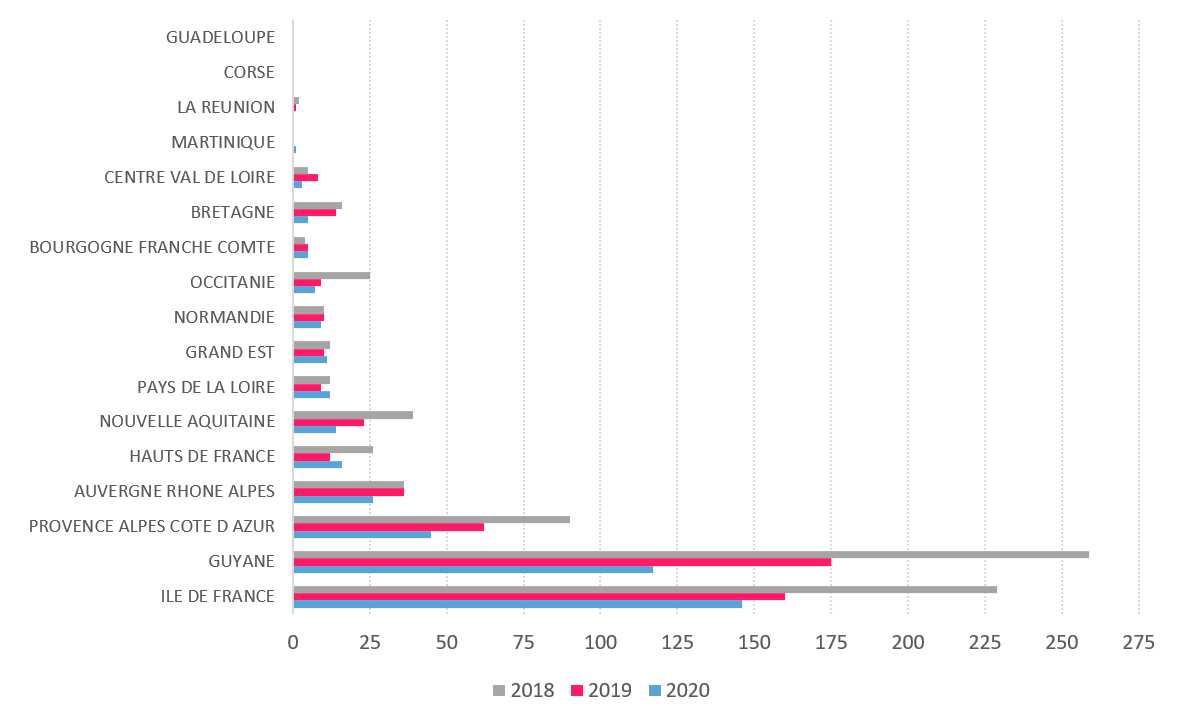
The number of new cases of lead poisoning (blood lead levels ≥ 50 µg/L) in France (including overseas departments) was 417 in 2020, compared to 534 in 2019 and 765 in 2018.
At the regional level
The indicators published on Geodes are presented in the table at the regional level. The number of blood lead level tests performed in France decreased in all regions between 2019 and 2020, with the exception of Hauts-de-France. The decrease ranged from -11% in Auvergne-Rhône-Alpes to -62% in Bourgogne-Franche-Comté.
The very low number of lead blood tests ordered in Guadeloupe, Martinique, Réunion, Mayotte, and Corsica in 2018, 2019, and 2020 makes it difficult to analyze or interpret data for these territories. The absence of Guadeloupe, Martinique, Réunion, and Mayotte from national biomonitoring studies does not compensate for the lack of data on the overseas islands.
| Region | Lead levels | Early screening | Incident cases of lead poisoning1 | Prevalent cases of lead poisoning2 | Incident cases of lead poisoning in initial screening3 |
|---|---|---|---|---|---|
| Ile-de-France | 2,134 | 1,421 | 146 | 203 | 122 |
| Provence-Alpes-Côte d'Azur | 420 | 302 | 45 | 59 | 39 |
| Auvergne-Rhône-Alpes | 298 | 224 | 26 | 33 | 24 |
| Hauts-de-France | 273 | 205 | 16 | 24 | 15 |
| Occitanie | 153 | 108 | 7 | 13 | 6 |
| Grand-Est | 147 | 115 | 11 | 16 | 9 |
| New Aquitaine | 134 | 92 | 14 | 19 | 13 |
| Normandy | 91 | 66 | 9 | 12 | 9 |
| Pays de la Loire | 90 | 62 | 12 | 18 | 12 |
| Centre-Val de Loire | 57 | 43 | 3 | 3 | 3 |
| Brittany | 50 | 44 | 5 | 5 | 5 |
| Burgundy-Franche-Comté | 34 | 27 | 5 | 6 | 5 |
| Corsica | 5 | 3 | 0 | 0 | 0 |
| French Guiana | 286 | 240 | 117 | 125 | 113 |
| Guadeloupe | 5 | 5 | 0 | 0 | 0 |
| Reunion | 3 | 3 | 0 | 0 | 0 |
| Martinique | 2 | 2 | 1 | 1 | 1 |
| Mayotte | 0 | 0 | 0 | 0 | 0 |
| TOTAL | 4,182 | 2,962 | 417 | 537 | 376 |
1 Incidence cases of lead poisoning: Number of children who, for the first time in 2020, had a blood lead level above the mandatory reporting threshold.
2 Prevalence cases of lead poisoning: Number of children who, during 2020, had at least one blood lead level above the mandatory reporting threshold.
3 Incidence cases of lead poisoning in initial screening: Number of children who had a blood lead level exceeding the mandatory reporting threshold during the initial screening conducted in 2020.
Trends in childhood lead poisoning screening (initial screening + follow-up) by region between 2018 and 2020, SNSPE

The number of new cases identified in 2019 declined in 2020 in many regions, and this decline mirrored the decrease in testing activity. The number of new cases remained stable in Hauts-de-France, Pays de la Loire, Grand Est, Normandy, and Bourgogne-Franche-Comté.
Trends in the number of new cases of childhood lead poisoning by region between 2018 and 2020, SNSPE
In 2020, the proportion of children with blood lead levels exceeding the 50 µg/L threshold among those screened for the first time (screening yield) ranged from 5% in Occitanie to 47% in French Guiana, with a national average of 13%. This proportion increased between 2019 and 2020 in Île-de-France, Bourgogne-Franche-Comté, Normandy, French Guiana, and Pays de la Loire. It decreased in Nouvelle-Aquitaine, Occitanie, and Brittany. It remained stable elsewhere.
Changes in the screening rate (%) for childhood lead poisoning by region between 2018 and 2020, SNSPE

The year 2020 was marked by a decline in both screening activity and the number of identified cases of lead poisoning in children, linked to the COVID-19 pandemic, which resulted in reduced access to healthcare for the public and lower activity among the services responsible for screening children. The yield from initial screening in 2020 remained stable at the national level compared to 2019 and 2018. Therefore, overexposure to lead in the home during lockdowns was not identified or measurable on a national scale. Analysis of screening activity data collected in 2021 will make it possible to assess whether a catch-up in screening activity was achieved in 2021.
See also

bulletin national
20 April 2020
Trends in Lead Poisoning Among Children: 2015–2018 Report.
See also
bulletin national
1 June 2021












