



Industrial fire on September 26, 2019, in Rouen: initial figures on participation in the survey “A Study Focused on Your Health”
Santé publique France has released the initial participation figures for the study on health and quality of life following the industrial accident that occurred in Rouen on September 26, 2019: "A Study Focused on Your Health."
Health and Quality of Life Study Following the Industrial Accident in Rouen on S...
Santé publique France was commissioned by the Directorate General for Health to assess the short-, medium-, and long-term health impacts of the accident that occurred on September 26, 2019, at the Lubrizol and NL Logistique sites in Rouen. To achieve this objective, a series of epidemiological studies was launched: the Santé Post Incendie 76 initiative.
The program’s first survey, titled “A Study Listening to Your Health,” focuses on perceptions of pollution generated by the fire, symptoms and health issues experienced during and after the event, as well as health and quality of life one year later. It is being conducted on a representative sample of residents from 122 municipalities in Seine-Maritime (76) affected by the accident, and residents of Le Havre and its surrounding areas serving as a control group.
Data collection for the survey took place from September to December 2020. This update provides information on its progress and initial participation figures.
Santé publique France thanks all residents of Seine-Maritime who participated in the survey and took the time to complete the questionnaire.
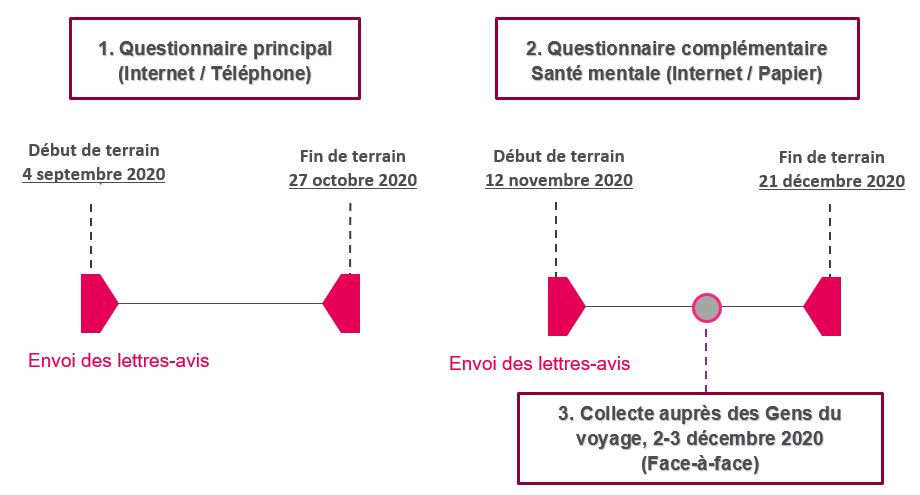
The 3 phases of data collection
Phase 1: The main questionnaire
Those selected at random who agreed to participate in the study could complete the main questionnaire, at their convenience, online or by phone with an interviewer. This phase of data collection took place during September and October 2020.
Phase 2: The supplementary questionnaire on mental health
Industrial accidents frequently have consequences for mental health. They can cause or exacerbate anxiety, depression, and what is known as post-traumatic stress. To assess the psychological consequences the fire may have had on the exposed population, a supplementary section was added to the study’s main questionnaire. This mental health questionnaire was offered to those who, having completed the first questionnaire, agreed to participate in a second phase of the study. It was possible to complete this questionnaire online or on paper in November and December 2020.
Phase 3: Survey of residents at the Petit-Quevilly Traveler Camp
The survey protocol called for including in the study all households living in the immediate vicinity of the fire, which includes the Travellers residing at the Petit-Quevilly reception site. However, for technical reasons, these individuals could not be randomly selected from the sampling frame used to construct the survey sample. Thanks to the active collaboration of the Relais-Accueil des Gens du voyage association, it was possible to include this population group in the study. Responses to both questionnaires (the main questionnaire and the mental health questionnaire) were collected simultaneously in December 2020 during face-to-face interviews.
Diagram - The 3 phases of data collection for the survey
The protocol and questionnaires are available for download.
High participation in the study
Number of people who responded to the questionnaires
Of the 10,777 people selected at random, 4,777 adults completed the main questionnaire, and 1,306 of them answered questions about the health of one of their children, also chosen at random.
The study’s objectives—to collect information on 5,000 adults and 1,400 children—were thus nearly met.
Among the adults who completed the main questionnaire, 2,894 people (61%) agreed to complete the supplementary questionnaire on mental health.
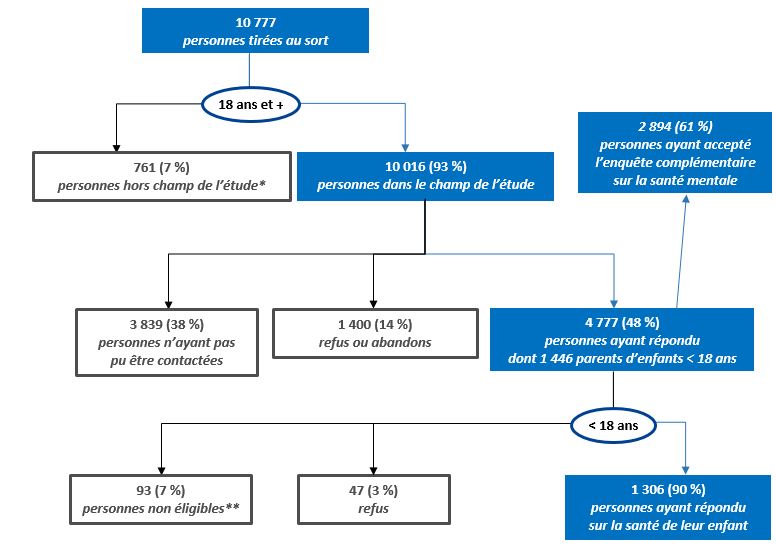
The following information applies only to the main questionnaire. Data on the mental health questionnaire will be available on the website shortly.
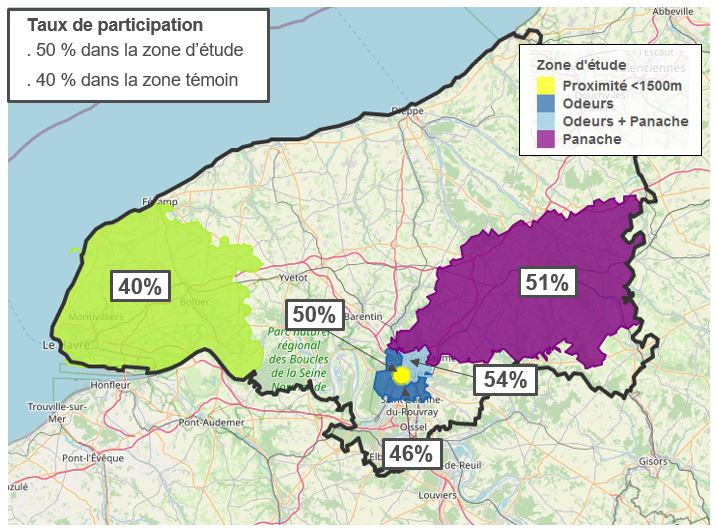
Study Participation Rate
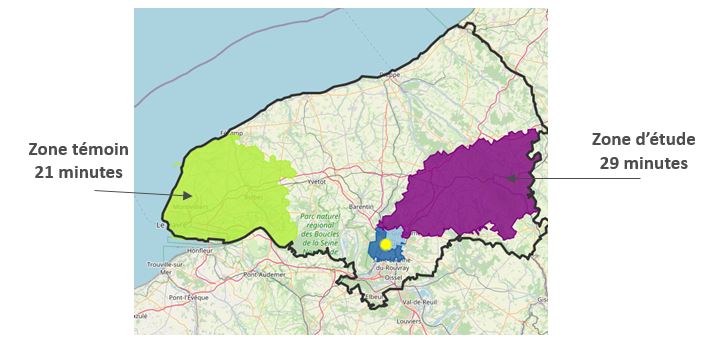
In the study area, comprising Rouen and its surroundings, the overall participation rate reached 50%. It was slightly lower in the municipalities located southwest of the fire (the “odors” stratum, shown in dark blue on the map). Slightly lower than that of the study area, the participation rate in the control area (Le Havre and its surroundings, shown in green on the map) was 40%.
Instructions for completing the main questionnaire
Collection method
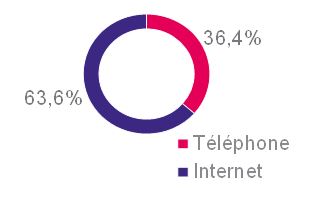
Duration of the survey (by phone)
Respondent Profile
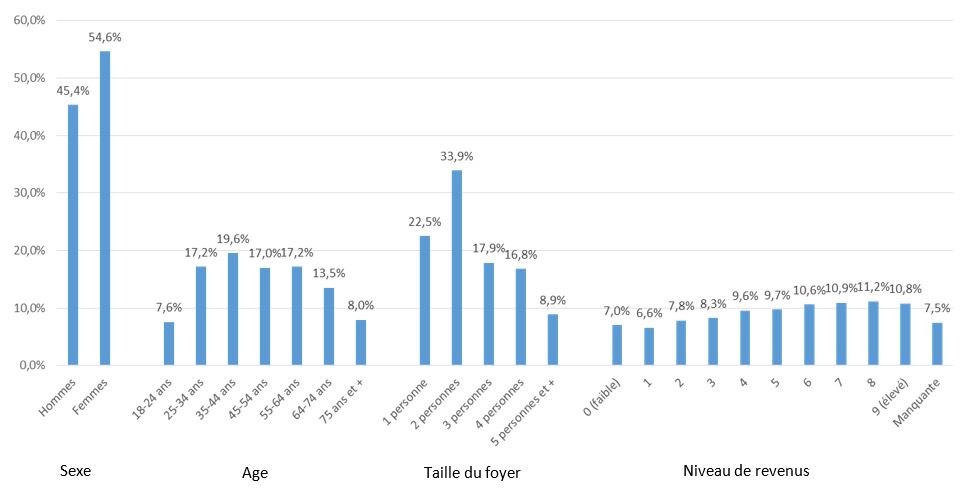
Women (54.6% of the adults surveyed) were more likely to participate than men.
Adults aged 35 to 44 were the most represented in the sample (19.6%).
In most cases (33.9%), households consisted of two people. Households with the highest income levels were proportionally more likely to participate in the study than less affluent households.
Composition of the respondent sample (raw data)
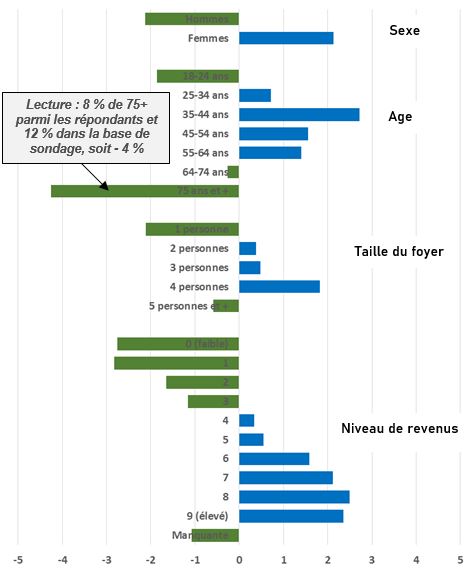
The figure below illustrates the differences observed between the sociodemographic structure of the sample ("respondents") and that of the study population as represented in the survey frame. It shows that the differences between the two are minimal, in the range of a few percentage points: for example, the sample includes about 4% fewer people aged 75 and older than the sampling frame, and 2% more four-person households.
Percentage point difference between respondents and the survey population
Further Analysis
The information collected through the questionnaires will be recorded and organized in a database for statistical analysis.
The analyses will describe perceptions of exposure to the fire (plumes of black smoke, odors, soot deposits, and roof debris, etc.) and count the number of people who experienced these nuisances. Symptoms and health issues experienced during the accident and its aftermath will be documented at this stage, along with the medical care they required, as well as the proportion of the population affected by these issues. The results of these descriptive analyses will be available in mid-2021.
More complex analyses will then be conducted to quantify the potential impact of the industrial accident on public health: a statistical link will be sought, on the one hand, between exposure to the fire and symptoms experienced during and after the event, and on the other hand, between exposure to the fire and health indicators measured one year later. The results and interpretations of these analyses, which will conclude the study, will be accompanied, if necessary, by public health recommendations and released at the end of the first half of 2021.












