




The disease
The Different Types of Diabetes
Diabetes mellitus is a metabolic disorder characterized by chronic hyperglycemia (excessively high blood glucose levels) resulting from a deficiency in either insulin secretion, insulin action, or both. There are different types of diabetes.
Type 2 diabetes is the most common form of diabetes. It is characterized by insulin resistance and a relative deficiency in insulin secretion, with either of these two characteristics potentially predominating to varying degrees. This form of diabetes primarily occurs in middle-aged adults but can also develop at a younger age, even during adolescence.
Type 1 diabetes, which is much less common, is primarily caused by the destruction of the pancreas’s beta cells, resulting in the affected person’s inability to produce insulin. For this reason, insulin injections are vital for these individuals. This form of diabetes occurs primarily in children and young adults.
Gestational diabetes refers to glucose intolerance in pregnant women. This type of diabetes begins and is diagnosed for the first time during pregnancy.
Risk Factors for Diabetes
The main risk factors for type 2 diabetes are age, being overweight, a sedentary lifestyle, a history of gestational diabetes, a family history of diabetes, or a state of prediabetes (fasting blood glucose between 1.10 g/L (6.1 mmol/L) and 1.26 g/L (7.0 mmol/L)).
The causes of type 1 diabetes are still poorly understood and are thought to be linked to an interaction between genetic predisposition and environmental factors. Numerous factors have been studied in the international literature, including viral infections, nutritional factors, stressful family living conditions, lack of breastfeeding, vitamin D deficiency, or factors related to reduced exposure to infections (hygiene hypothesis). In addition, environmental factors such as air pollution and endocrine disruptors have also been identified as risk factors for type 1 diabetes.
Key Statistics on Diabetes
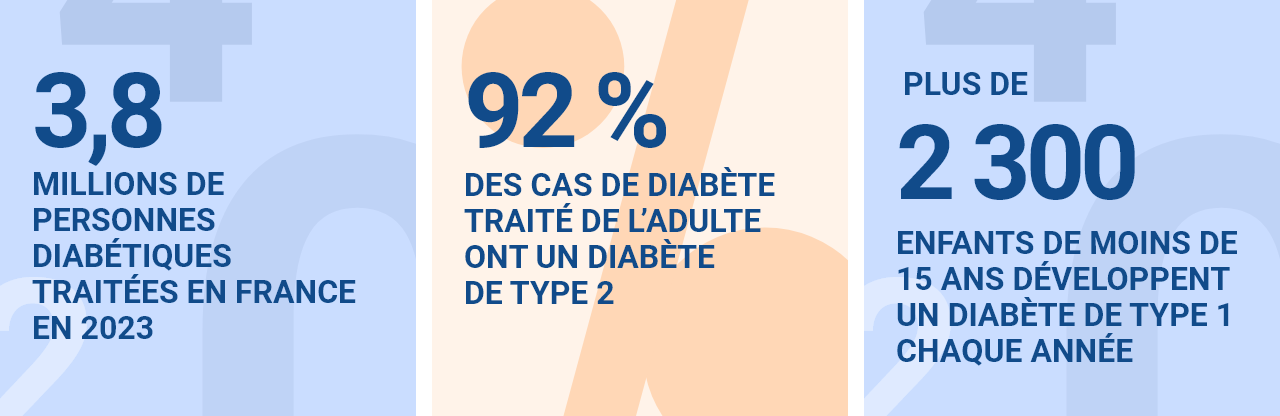
A simple diagnosis
Diagnosing type 2 diabetes is a simple medical procedure. It is made when a fasting venous blood glucose test (after at least 8 hours of fasting) is greater than 1.26 g/L (7 mmol/L) on two separate occasions. In the presence of typical symptoms of diabetes—such as excessive thirst, frequent urination, and unexplained weight loss—a single venous blood glucose measurement exceeding 2 g/L (11.1 mmol/L) is sufficient for diagnosis.
In addition, targeted opportunistic screening is recommended every three years for individuals over the age of 45 who have at least one other risk factor for type 2 diabetes:
non-Caucasian and/or migrant background;
markers of metabolic syndrome (overweight, high blood pressure, dyslipidemia);
history of first-degree family diabetes, or of transiently induced diabetes, or, in women, of gestational diabetes or of giving birth to a child weighing more than 4 kg.
In addition, a new method for diagnosing diabetes, based on glycated hemoglobin (HbA1c) levels, was proposed in 2009 by an international committee of experts but is not currently used as a diagnostic measure in France.
1Bergman A, Heindel JJ, Jobling S, Kidd KA, Zoeller RT (2012) State of the science of endocrine-disrupting chemicals—2012; Eze IC, Hemkens LG, Bucher HC, Hoffmann B, Schindler C, Kunzli N, Schikowski T, Probst-Hensch NM (2015) Association between ambient air pollution and diabetes mellitus in Europe and North America: systematic review and meta-analysis. Environmental Health Perspectives 123 (5):381-389. doi:10.1289/ehp.1307823.
SEE ALSO

Nutrition and Lifestyle Management of Type 2 Diabetes
Best practice guidelines for the management of type 2 diabetes have been published and updated by the French National Authority for Health (HAS) and the French Health Products Safety Agency (ANSM). Type 2 diabetes can be treated through dietary management and appropriate physical activity, as well as with tablets and/or injections of insulin or GLP-1 analogs.
Upon a doctor’s request, diabetes qualifies for 100% coverage by the Health Insurance system for medical expenses incurred in connection with this long-term condition (ALD).
To ensure proper medical care, guidelines were published in 2006 by the French National Authority for Health (HAS) and updated in 2007, aimed at both people with diabetes (type 1 and type 2) and relevant healthcare professionals.
See also
https://www.has-sante.fr/portail/jcms/c_419389/fr/ald-n8-diabete-de-type-2
https://www.has-sante.fr/portail/jcms/c_419399/fr/ald-n8-diabete-de-type-1-chez-l-adulte
Complications with a significant impact on quality of life
Uncontrolled diabetes can lead to:
In the short term, metabolic complications, such as:
ketoacidosis,
hyperosmolar coma,
hypoglycemia (low blood glucose levels).
Long-term complications:
macrovascular: damage to the blood vessels supplying the heart and brain, which can lead to a heart attack or stroke
microvascular: damage to the peripheral nervous system, kidneys, and retina, which can lead to lower limb amputation, dialysis, and blindness.
However, it has been shown that good control through lifestyle changes (diet, physical activity) and proper medical and, if necessary, pharmacological management can help prevent or significantly reduce the risk of complications.
Diabetes can significantly impair the quality of life of those affected.
Regarding gestational diabetes, it can be associated with complications in both the mother and the unborn child. The consequences of gestational diabetes can include macrosomia, congenital malformations, fetal or neonatal death...
Significant social and regional disparities
The prevalence of type 2 diabetes varies significantly based on socioeconomic and geographic factors. In fact, the prevalence is:
nearly twice as high as the national average in the overseas departments
higher in the North, the Northeast, and in certain departments of the Île-de-France region, such as Seine-Saint-Denis, but low in Brittany
higher in the most socioeconomically disadvantaged municipalities
higher among people from lower socioeconomic backgrounds and in certain professions: the prevalence of diabetes is twice as high among people with low levels of education compared to those with higher levels, with more pronounced differences among women than among men
twice as high among women of North African origin than among women of French origin, at equivalent socioeconomic and obesity levels.
Significant social and regional inequalities are also observed in the occurrence of complications.
Download

rapport/synthèse
6 September 2019
The Burden of Diabetes in France in 2016: An Epidemiological Overview
In relation to

Nutrition and Physical Activity
thematic dossier
Nutrition and physical activity are two major determinants of health that contribute to improving the health of the population and are key priorities in public health policy.

Alcohol
thematic dossier
Alcohol is deeply rooted in French culture. Its consumption remains a major cause of death and illness in France.

Tobacco
thematic dossier
Despite a slight decrease compared to 2015, tobacco remains responsible for more than 68,000 premature deaths in 2023—accounting for 11% of total mortality—making it still the leading cause of...











