See also




Partnership objectives, structure and organization, funding, governance, and expected impacts for the various stakeholders—find all the information about the PARC European partnership.
Over the past century, numerous sector-specific initiatives, policies, and regulations have been implemented to regulate chemicals and minimize their impacts on human health and the environment.
The PARC partnership project—Partnership for the Assessment of Risks from Chemicals—will establish a center of excellence in the field of risk assessment within research and innovation (R&I), comprising organizations involved in chemical risk assessment and management, to support authorities responsible for risk assessment and management (RM) at the European level. This center of excellence will address current and emerging challenges in chemical safety to ensure the transition to next-generation risk assessment (NGRA), in line with the European Green Deal’s zero-pollution ambition for a toxic-free environment, and in particular, the “Chemicals Strategy for Sustainable Development Toward a Toxic-Free Environment.” PARC will build on the lessons and knowledge gained and go beyond previous initiatives, notably the European HBM4EU program "Human Biomonitoring for Europe."
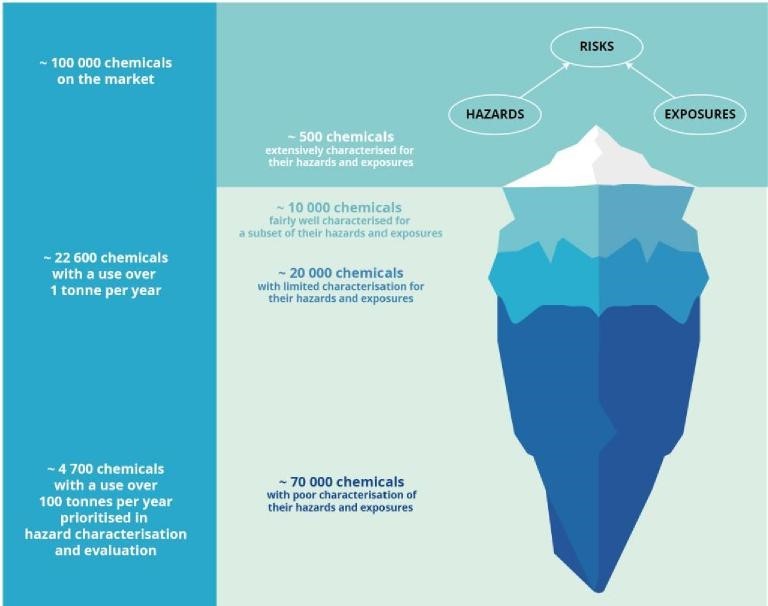
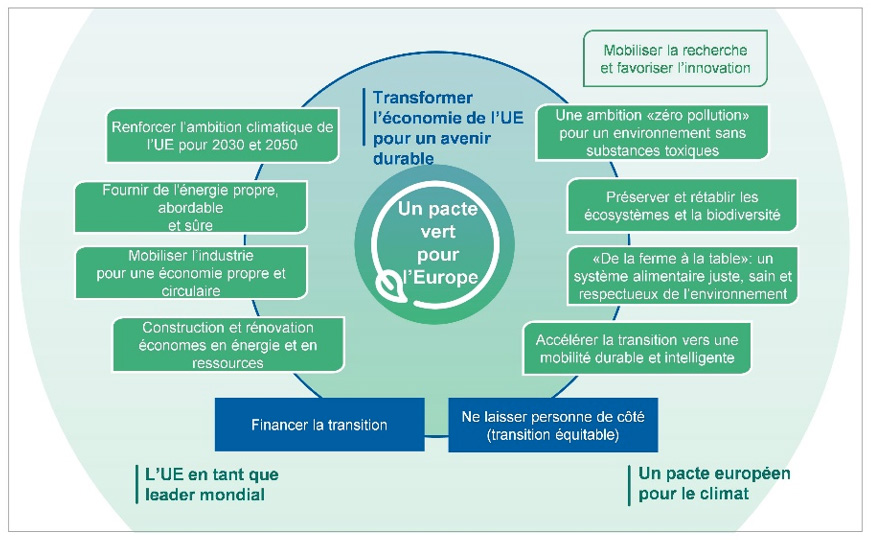
The partnership was established to consolidate and strengthen European capabilities in the field of chemical risk assessment in order to protect human health and the environment. The partnership’s structure is designed to address three specific objectives (SO), around which 13 operational objectives (OO) are organized.
SO1 - Bring together national and European risk assessors as well as EU regulatory bodies with the scientific community within a transdisciplinary network to set R&I priorities in the field of chemical risk assessment.
OO1: Establish and operate a high-level group to strategically steer PARC
OO2: Develop a sustainable network of national hubs (NH)
OO3: Define common R&I strategies with transparent criteria and a priority-setting strategy
OO4: Actively encourage regulatory authorities to adopt the knowledge generated by PARC
OO5: Promote cooperation with other R&I initiatives
OO6: Communicate and disseminate PARC knowledge to improve understanding and raise public awareness of chemical risk assessment.
SO2 - Conduct a joint research and innovation program to address the priorities identified in the common strategies, supporting current regulatory risk assessment processes and addressing emerging challenges.
OO7: Develop and implement annual research and innovation work programs to address identified needs in chemical risk assessment
OO8: Develop monitoring capacity by expanding the HBM platform created under HBM4EU and supporting the provision of environmental and multi-source data for regulatory purposes
OO10: Implement FAIR data practices and strengthen innovation in the analysis of complex data for risk assessment
OO12: Develop innovative models and concepts for risk assessment and provide toolkits to promote their acceptability and adoption.
SO3 - Strengthen existing capacities and create new EU-wide transdisciplinary research and innovation platforms to support chemical risk assessment
OO9: Develop tools to facilitate the acceptance and use of PARC results in regulatory risk assessment processes and support (existing) standardization and validation processes for innovative risk assessment approaches
OO11: Consolidate existing networks and develop new ones of laboratories and research centers
OO13: Build capacity by developing and implementing training and exchange programs in the field of chemistry
PARC is organized into nine Work Packages (WP) that work closely together to achieve the three levels of specific objectives mentioned above.
Responsible for overall coordination, including the administrative and financial management of the partnership, monitoring the implementation of activities, tracking progress through reports, developing and monitoring key performance indicators, organizing PARC project governance meetings, and managing ethics-related activities.
This WP is coordinated by ANSES as the PARC coordinating institution and involves the participation of members of the Grant Signatories’ Council, WP co-leads, national contact points, and national Hub coordinators.
Will establish a transdisciplinary network to set R&I priorities in chemical risk assessment. The overall objective of WP2 is to ensure appropriate links between research and its regulatory added value for the EU, as well as to ensure the sustainability of PARC’s activities, results, and outputs beyond the 7-year project period. WP2 will implement a process to ensure the harmonization of activities and alignment with regulatory priorities. WP2 will also establish a common agenda at the science-policy interface through a prioritization process, making PARC’s knowledge available and actively promoting its regulatory consideration.
This WP is co-led by the European Environment Agency (EEA) and the Austrian Federal Environment Agency (Austria).
Will ensure the development of synergies and collaborations with external initiatives. WP3 will be responsible for stakeholder relations and international cooperation and will develop appropriate tools for communicating and disseminating PARC’s results.
This WP is co-led by the National Institute of Health Dr. Ricardo Jorge (Portugal) and the General State Laboratory of Chemistry (Greece).
Will aim to monitor and measure exposure in both humans and the environment, taking into account different sources, the fate of chemicals, and exposure pathways, while developing innovative analytical methods and tools.
This WP is co-led by the German Environment Agency (Germany) and Santé publique France (France).
It will contribute to the examination of new approaches and methods for health risk assessment and provide data to fill knowledge gaps regarding poorly characterized contaminants or emerging hazards. WP5 will also aim to promote the use of innovative methods and tools and contribute to the integration of new technologies.
This WP is co-led by ANSES (France) and the German Federal Institute for Risk Assessment (BfR) (Germany).
Will contribute to the development of viable and effective regulatory risk assessment methods for human health and the environment, including adverse outcome pathways (AOPs) and Integrated Approaches to Testing and Assessment (IATAs), to support regulatory processes, the transition to a circular economy, and relevant policy strategies. IATAs will be developed in close collaboration with relevant stakeholders and evaluated through case studies.
WP6 will also facilitate the development of innovative approaches and practices for assessing exposure and risks associated with priority chemicals (including mixtures) to better understand their impact on human health and the environment in order to inform regulatory approaches. A review of existing regulatory assessment systems will be conducted to prioritize research and facilitate the adoption of new approaches.
This WP is co-led by the National Institute for Public Health and the Environment (RIVM) (Netherlands) and the Swedish Chemicals Agency (KEMI) (Sweden).
Will enhance the exchange and reuse of research and regulatory data. To this end, WP7 will collaborate with all other WPs to facilitate data access, storage, and analysis, as well as integration with the modeling and analysis tools developed by WPs 4, 5, 6, and 8. It will work on the harmonization of data and metadata. In addition, it will develop innovative tools to analyze growing amounts of data and their uncertainty.
This WP is co-led by the Flemish Institute for Technological Research VITO (Belgium) and the University of Birmingham (United Kingdom).
Will provide concepts and toolkits in the form of sustainable, integrated models for substance assessment using the early warning concept. WP8 will collaborate with the various WPs and external communities, including stakeholders, working on these concepts. Stakeholders will be engaged to test the applicability of the SSbD (Safe and Sustainability by Design) toolkit to the defined criteria.
This WP is co-led by Aristotle University of Thessaloniki (AUTh) in Greece and the University of Naples Federico II (UNINA) in Italy.
Will support laboratory capacity building and networking across various fields of activity by identifying existing and potential networks, supporting the implementation of standardization approaches, the assessment of performance reproducibility and its monitoring (QA/QC), and by organizing training sessions for partnership members, stakeholders, and communities of risk assessors and risk managers.
This WP is co-led by the National Center for Toxic Compounds, represented by Masaryk University (Czech Republic), and the Carlos III Health Institute (Spain).
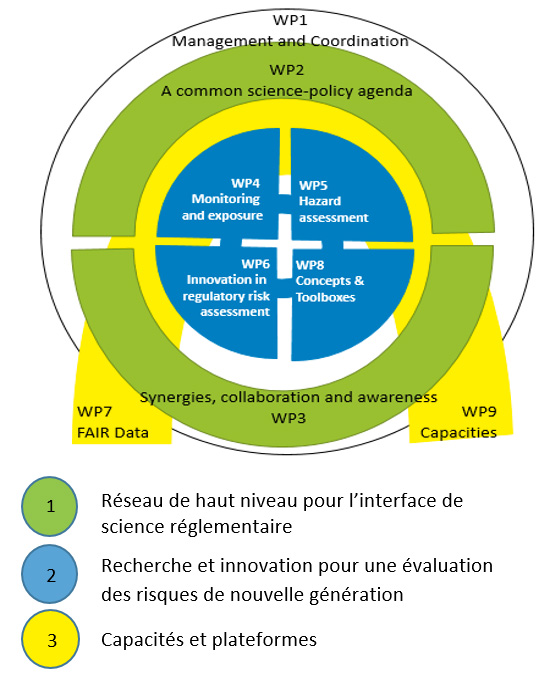
All WPs will interact closely with one another on cross-cutting topics. The R&I activities carried out by WP4, WP5, WP6, and WP8 will be supported by WP2, WP3, WP7, and WP9. To implement activities within the various WPs, a Management Board (MB) composed of the WP co-leads and the coordinator will manage a Strategic Research and Innovation Agenda (SRIA) to translate activities into projects. These projects will be implemented and monitored in collaboration with the task co-leads and partners.
The portfolio of activities will be updated annually to incorporate new projects and close others in preparation for the annual synthesis report. A prioritization process will be developed by WP2 to identify substances/groups of substances and methodologies of interest that will foster innovation in risk assessment. WP2 will also identify projects to be included in the SRIA based on their regulatory relevance, consistency, and feasibility. Each year, new projects selected through the evaluation process will be added to the PARC portfolio of activities and communicated in the annual work program. Progress on the implementation of all projects will be monitored by the Board of Directors and reported in the annual work report.
The funding mechanism chosen by the European Commission for PARC is a co-financed partnership. PARC is co-financed at the global partnership level, with 50% coming from the Member States and 50% from the EC’s Horizon Europe program, which means that the EC will offer a single co-financing rate for all partners and all activities within the partnership (50% of total costs).
Total budget: €400 million.
Maximum EU contribution: €200 million.
PARC is a public-public partnership whose structure—in terms of both activities and governance—ensures alignment with national and European priorities and policies and meets the needs of national and European risk managers in the field of chemical risk assessment.
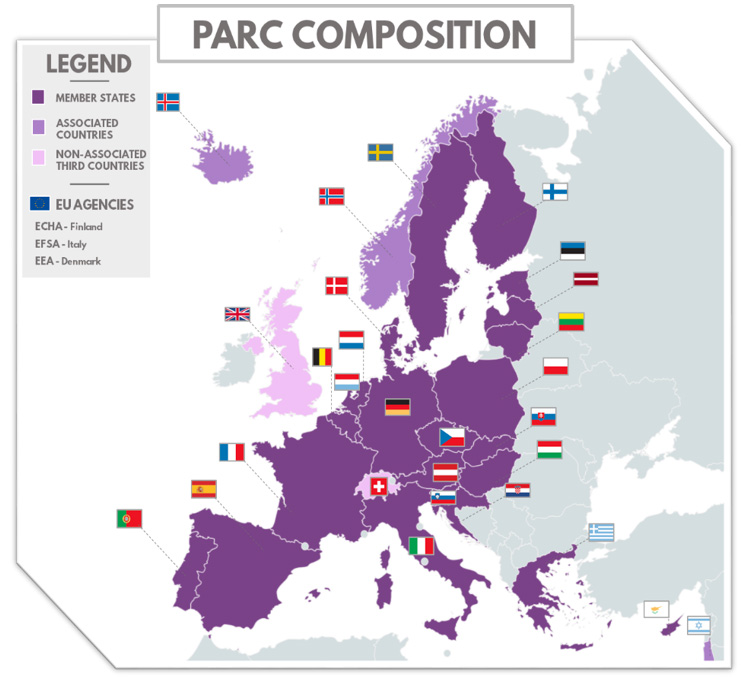
The relevant ministries of all participating countries, as well as the relevant directorates-general of the European Commission (EC) (RTD, GROW, ENV, SANTE, JRC) that are part of the Governing Board (GB). The EC will be responsible for the Member States’ national political and financial commitment to the partnership and will work closely with the members of the Consortium Agreement Signatories Board (GSB).
National organizations responsible for chemical risk assessment, monitoring, and public health, primarily as members of the Consortium Agreement Signatories’ Board (GSB). EU agencies (EFSA, ECHA, and EEA) involved in chemical risk assessment and/or generating knowledge on chemical safety will also be part of PARC and will be members of the GSB. The GSB, in collaboration with the GB and the EC, contributes to PARC’s guidelines and priorities, as well as to the development of the EU’s chemical safety strategy and the identification of synergies, resources, and capacities among partners. At the national level, GSB members are responsible for the administrative and financial management of their affiliated entities (AEs). AEs may include national public organizations, universities, and research bodies that are part of national research networks on chemical risk assessment.
The partnership will benefit from the establishment of a national hub (NH) in each participating country, with designated national contact points (NHCPs) that will coordinate exchanges with national ministries, national partners, and other relevant national stakeholders, and contribute to the development of synergies with national/EU initiatives. For France, Santé Publique France has been designated as the national stakeholder contact (Sebastien.DENYS@santepubliquefrance.fr and Loic.RAMBAUD@santepubliquefrance.fr).
As with the NH, the EU Hub, composed of participating EC Directorates-General and EU agencies, will enable members of the GB and GSB at the EU level to coordinate, consult, and share knowledge with other EC DGs or EU agencies interested in PARC but not directly involved in its implementation.
National institutions, as national networks of decision-makers, risk assessors, researchers, and stakeholders, will play a crucial role in identifying potential new partners and the expertise that could benefit from their participation in PARC.
Dialogue and collaboration with the international community will also be essential for mutual support and for identifying needs and opportunities for harmonization and the development of tools that support collaboration. To this end, an International Board (IB) composed of experts from other international chemical risk assessment platforms, scientific advisory boards or scientific societies, or experts from related European or international activities, will help ensure that the partnership establishes links and a dialogue with relevant international activities.
Monitoring the implementation of PARC and fostering interaction between risk assessors and the scientific community will guide R&I activities aimed at delivering results and knowledge that meet the needs of end users. PARC will actively seek and implement synergies and develop interactions with other R&I initiatives (OO5) and various types of end users. Consequently, the communication, dissemination, and exploitation strategy and plan will be designed and targeted at the various end users of the partnership’s results (OO6). In addition, strong links will be established at the European/national/regional levels among entities involved in risk assessment. These links will be actively directed and managed by the National Hub Contact Points (NHCPs) and will contribute to expanding the network of national hubs.
PARC will support innovative approaches to chemical risk assessment at the national, European, and international levels to strengthen the confidence of workers, citizens, and stakeholders in science and to highlight how regulations protect human health and the environment.
PARC will contribute to the achievement of the European Commission’s priority “Living and working in a healthy environment” by enabling decision-makers and regulators to be better informed about the risks of chemicals to the environment and human health, and by contributing to the development of appropriate, sustainable policies and practices grounded in concrete scientific evidence.
The generation of data and knowledge will contribute to a higher level of protection for the public health of European citizens and the environment and will help maintain and strengthen the trust that European citizens have in their institutions. Communication about PARC’s activities and the dissemination of results will enable citizens to better understand environmental and health issues, the measures needed to address them, as well as the related policies and regulations aimed at protecting them and the environment. PARC will contribute to a better understanding of the risks associated with chemical exposure and the definition of health safety.
See also












