


A Study of the Complex Relationships Between Telework Conditions and the Onset of Low Back Pain, Taking Depressive Symptoms into Account
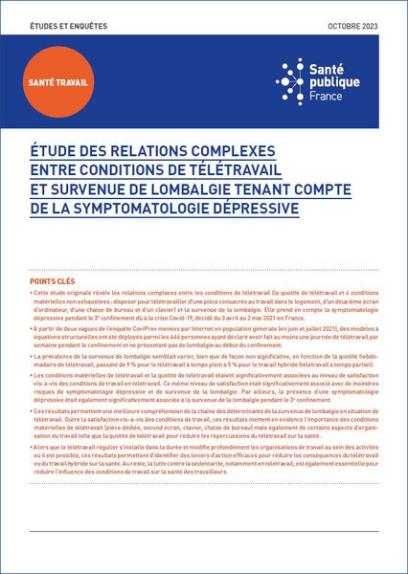
This original study reveals the complex relationships between the conditions of remote work (the proportion of time spent working remotely and four non-exhaustive material conditions: having a dedicated work space in the home, a second computer monitor, an office chair, and a keyboard) and the onset of low back pain. It examines depressive symptoms during the third lockdown due to the COVID-19 pandemic, which was in effect from April 3 to May 2, 2021, in France.Based on two waves of the CoviPrev survey conducted online among the general population (in June and July 2021), structural equation models were applied to the 466 individuals who reported working from home at least one day per week during the lockdown and who did not have low back pain at the start of the lockdown.The prevalence of low back pain appeared to vary—albeit not significantly—depending on the proportion of the workweek spent working from home, ranging from 9% for full-time remote work to 5% for hybrid work (part-time remote work).The physical conditions for remote work and the proportion of time spent working remotely were significantly associated with the level of satisfaction with remote work conditions. This same level of satisfaction was significantly associated with a lower risk of depressive symptoms and the onset of low back pain. Furthermore, the presence of depressive symptoms was also significantly associated with the onset of low back pain during the third lockdown. These results provide a better understanding of the chain of factors determining the onset of low back pain in a remote work setting. In addition to satisfaction with working conditions, these results highlight the importance of the physical conditions of remote work (dedicated room, second monitor, keyboard, office chair) but also of certain aspects of work organization, such as the proportion of time spent working remotely, to reduce the health impacts of remote work.As regular remote work becomes a long-term fixture and profoundly changes work organization in sectors where it is feasible, these findings help identify effective strategies to reduce the health impacts of remote or hybrid work. Furthermore, combating a sedentary lifestyle—particularly when working remotely—is also essential for reducing the impact of working conditions on workers’ health.
Author(s): Fouquet Natacha, Ménard Céline, Bodin Julie, Roquelaure Yves
Publishing year: 2023
Pages: 14 p.
Collection: Studies and Surveys
In relation to
Our latest news

news
Shamonda Virus: First Human Case Detected in France—What Do We Know?

news
Call for Nominations for the Renewal of the Scientific Advisory Board of the...

news












