



Nearly 2,000 outbreaks of foodborne illness were reported in France in 2022
Santé publique France has released its annual surveillance data on outbreaks of foodborne illness in France and is reiterating its recommendations for preventing food poisoning.

Outbreaks of foodborne illness
thematic dossier
A foodborne illness outbreak is defined as the occurrence of at least two cases with similar symptoms—typically gastrointestinal—that can be traced to a single food source. In France, such...
Foodborne infectious diseases, such as foodborne illness outbreaks, pose a health risk to the public and are often caused by the consumption of food contaminated with pathogenic bacteria (Salmonella, Bacillus cereus, Staphylococcus aureus, etc.). Each year, between 10,000 and 16,000 people are affected by an outbreak of foodborne illness in France, whether in the home, in commercial food service establishments, or in institutional settings.
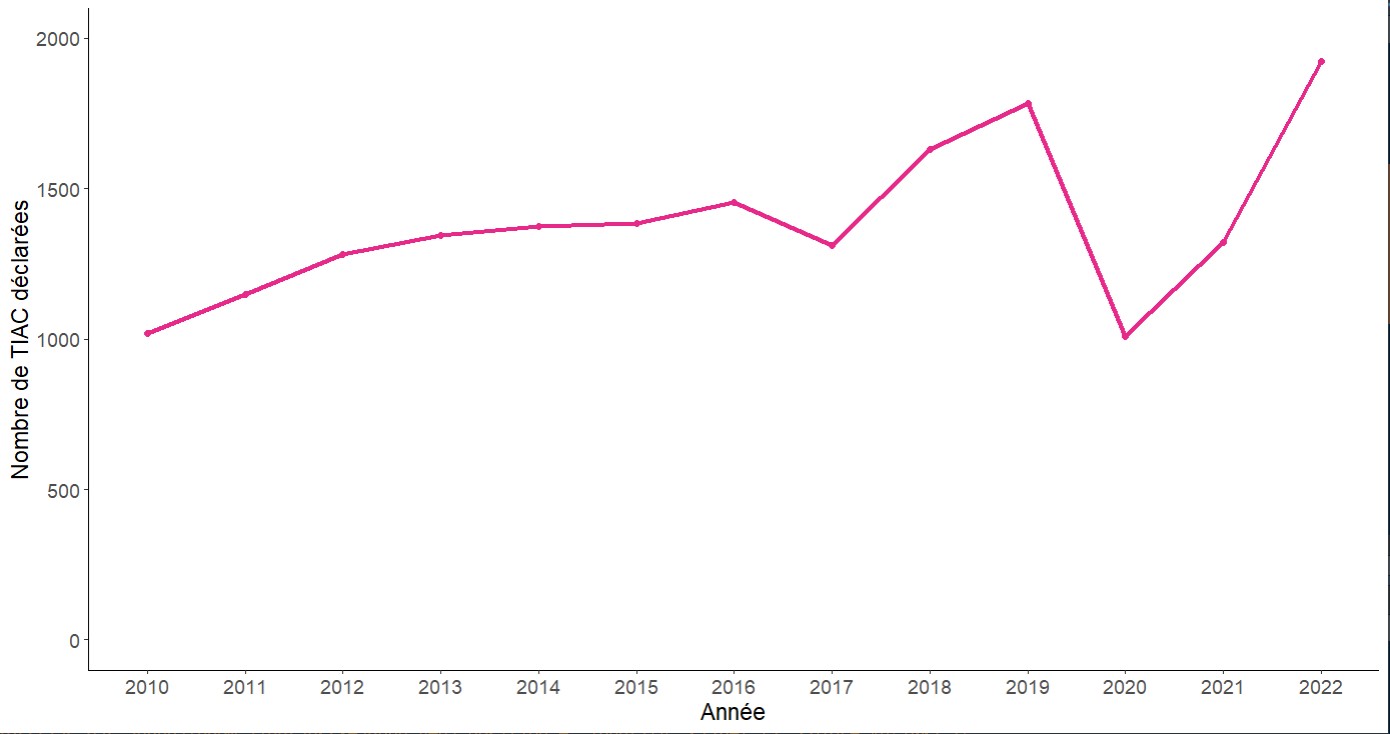
Each year, Santé publique France publishes a report on the epidemiological trends of foodborne illness based on mandatory reporting data. In 2022, the number of reported foodborne illness cases was the highest recorded since surveillance began in 1987 and continued the upward trend observed prior to the COVID-19 pandemic. It exceeded the increase already observed in 2019 following a decline in 2020–2021, most likely linked to the implementation of physical distancing measures and the adoption of preventive hygiene practices during the pandemic.
The number of reported foodborne illness outbreaks is the highest recorded since 1987
In 2022, 1,924 outbreaks of foodborne illness were reported in France, affecting 16,763 people, of whom 643 (4%) sought medical care (hospitalization or emergency room visits) and 17 (0.1%) died.
Number of foodborne illness cases reported in France to the ARS and/or the DD(CS)PP between 2010 and 2022
As in previous years, the most frequently identified pathogen was Salmonella, accounting for 42% of foodborne illness cases with a confirmed pathogen (44% in 2021). The most commonly suspected pathogens were Bacillus cereus, Staphylococcus aureus, and Clostridium perfringens, accounting for 73% of foodborne illness cases (67% in 2021). For 15% of reported foodborne illness cases, no pathogen could be identified or suspected (19% in 2021).
For 39% of Salmonella-confirmed foodborne illnesses, the consumption of eggs or egg-based products was suspected as the source of infection (42% in 2021). Foodborne illnesses caused by Clostridium perfringens, Bacillus cereus, or Staphylococcus aureus were predominantly associated with the consumption of prepared or cooked dishes (39%, 42%, and 46%, respectively). Finally, the consumption of shellfish was suspected to be the cause of 39% of confirmed or suspected viral foodborne illnesses.
Between 2021 and 2022, the proportion of foodborne illnesses following family meals decreased from 33% to 25%, while the proportion of foodborne illnesses reported following meals at commercial restaurants increased from 35% to 45%.
In 2022, 591 corrective measures were taken (staff information/training, facility disinfection, requests for repairs, facility closures, and food seizures) following foodborne illnesses occurring in institutional or commercial food service settings.
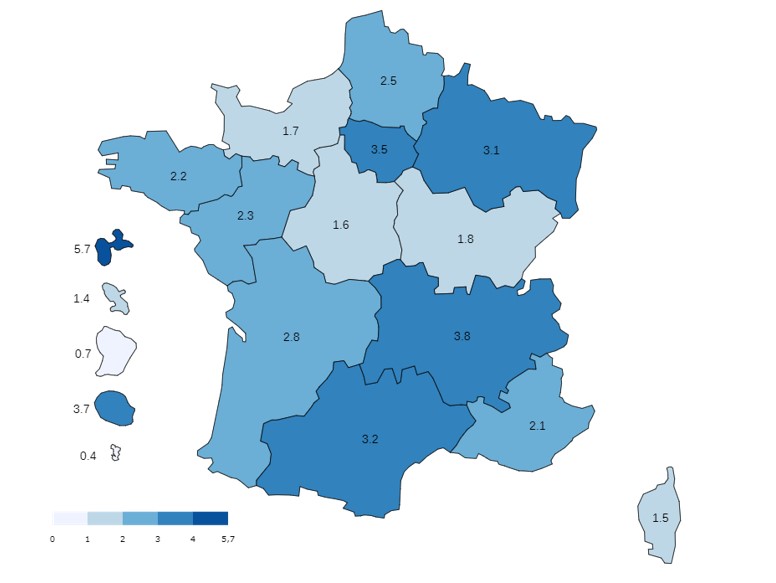
Distribution of the number of foodborne illnesses reported to the ARS and/or DD(CS)PP per 100,000 inhabitants by region - France, 2022
Download

bulletin national
21 February 2024
Surveillance of Outbreaks of Foodborne Illness. Data from Mandatory Reporting, 2022.
What are the recommendations for preventing food poisoning?
To prevent the risk of food poisoning, there are some simple steps you should follow:
Wash your hands thoroughly with soap and water before and during meal preparation;
avoid preparing meals if you have symptoms of gastroenteritis;
clean the refrigerator immediately with detergent if food spills inside;
Use a separate cutting board for each type of food: designate one for raw meat and fish, and another for cooked foods and clean vegetables. Once food is cooked, do not reuse dishes or utensils that were used to handle raw ingredients;
Do not leave food at room temperature for more than 2 hours before refrigerating it;
Do not store deli products, prepared meals, cream-based pastries, or unpackaged “highly perishable” foods without a best-by date for more than 3 days;
maintain a temperature of 4°C in the coldest part of the refrigerator and check that the doors seal properly;
Do not store meals and infant formula for more than 48 hours at 4°C; opt for sterile liquid formulas for babies prone to infections.
Recommendations for young children, pregnant women, and immunocompromised individuals:
cook ground meat thoroughly to protect against pathogens;
Consumption of raw meat or fish (such as tartare or carpaccio) and raw milk dairy products (with the exception of hard, pressed cheeses like Gruyère or Comté) is strongly discouraged.
Learn more:
Hygiene tips for the kitchen | ANSES - French Agency for Food, Environmental and Occupational Health & Safety
Infographic on a food safety alert (santepubliquefrance.fr)












