


January 2015 Attack: Santé publique France Releases Results of the I.M.P.A.C.T.S. Study
In the wake of the attacks that plunged France into mourning in January 2015, Santé publique France and the Ile-de-France Regional Health Agency launched the I.M.P.A.C.T.S. study. The full results of this study, which surveyed individuals affected by the events (victims, bereaved family members, first responders, and witnesses), are being released today.
Study Population
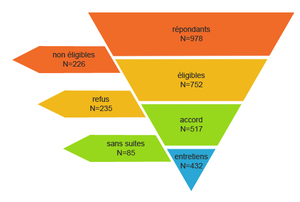
Of the 978 people who responded to the questionnaire, 422 were included in the study population: 190 civilians and 232 first responders. Among the reasons for refusal, “lack of time” accounted for 44% among first responders, while “ongoing distress” or “a desire not to revisit a painful event” accounted for 33% among the civilian population.
Population inclusion flowchart
In the civilian population: 6 months later, trauma still present
These initial results demonstrated that, 6 months after the events, psychotraumatic consequences remained significant among the civilian population. Nearly 4 in 10 people exhibited at least one mental health disorder, with severity varying according to the intensity of exposure: post-traumatic stress (20%), major depression (20%), and anxiety disorders (30%). Those most affected were people who were directly threatened and those close to a victim (someone killed, injured, or receiving care). However, witnesses who were not directly threatened also exhibited mental health disorders at the 6-month mark. It is also worth noting that early intervention was associated with a lower incidence of anxiety and depressive disorders at the 6-month mark.
Key takeaways:
More than half of the population received medical or psychological care or some form of support, and 7% sought it on their own initiative.
One-quarter of the surveyed population sought psychiatric or psychological follow-up care at 6 months in private practice or in a hospital setting.
More than 20% of respondents increased their use of psychoactive substances (alcohol, tobacco, and/or cannabis).
25% of the population consulted a doctor for a non-psychological problem they considered to be related to the event (sleep disorders, fatigue, cardiovascular, musculoskeletal, or dermatological conditions).
32% of respondents were unable to work due to their health condition, of whom 11% had not yet been able to return to work 6 months after the events
Among first responders: a considerable mobilization in terms of duration and intensity
Professionals were heavily mobilized to assist victims. Law enforcement officers were the responders most exposed to the threat and most frequently bereaved among the respondents. The impact on the mental health of professionals differed from that of the civilian population. The survey results highlight the importance of expanding training in stress management and the consequences of psychological trauma to prevent adverse health effects.
Key takeaways:
An average of 11 hours on-site on the first day for psychological support staff and law enforcement officers.
One-third of responders worked at multiple sites, raising concerns about cumulative exposure.
Psychopathological consequences were less frequent than in the civilian population.
Fewer than 10 responders experienced post-traumatic stress disorder, and nearly one in 10 had at least one anxiety disorder.
Fewer than one in 10 responders was unable to work, and about 20 were placed on leave following the intervention.
86.3% of responders reported knowing a resource person within their institution who could provide them with assistance.
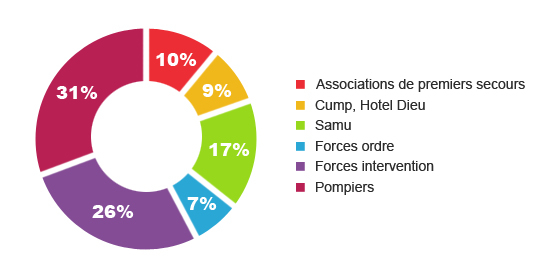
Distribution of responders involved in the January 2015 attacks in the Île-de-France region by institution, IMPACTS January 2015, Santé publique France
A second interview to complete the study
The results of the first wave of the IMPACTS study were consolidated and enriched by conducting a second interview with the same population, which took place between June and October 2016 (12 months after the initial enrollment). More than 350 of the 473 people recruited for this second wave agreed to participate. This cohort study, conducted in collaboration with Inserm, measures the remission, persistence, or reactivation of disorders due to events that have occurred since the attacks, as well as the consequences of the attacks on participants’ family and professional lives and the care trajectories (interruptions and resumption of care) undertaken by these exposed individuals.
Santé publique France offers a dedicated resource to help cope with traumatic events. This resource provides exposed individuals with information on health issues that may arise following psychological trauma and on the available care options.
Learn more:
• Vandentorren S., Sanna A., Aubert L., Pirard P., Motreff Y., Dantchev N., Baubet T. Impacts Cohort Study. Phase 1: June–October 2015. Saint-Maurice: Santé publique France; 2017. 92 p.• Resource on terrorist acts.












