


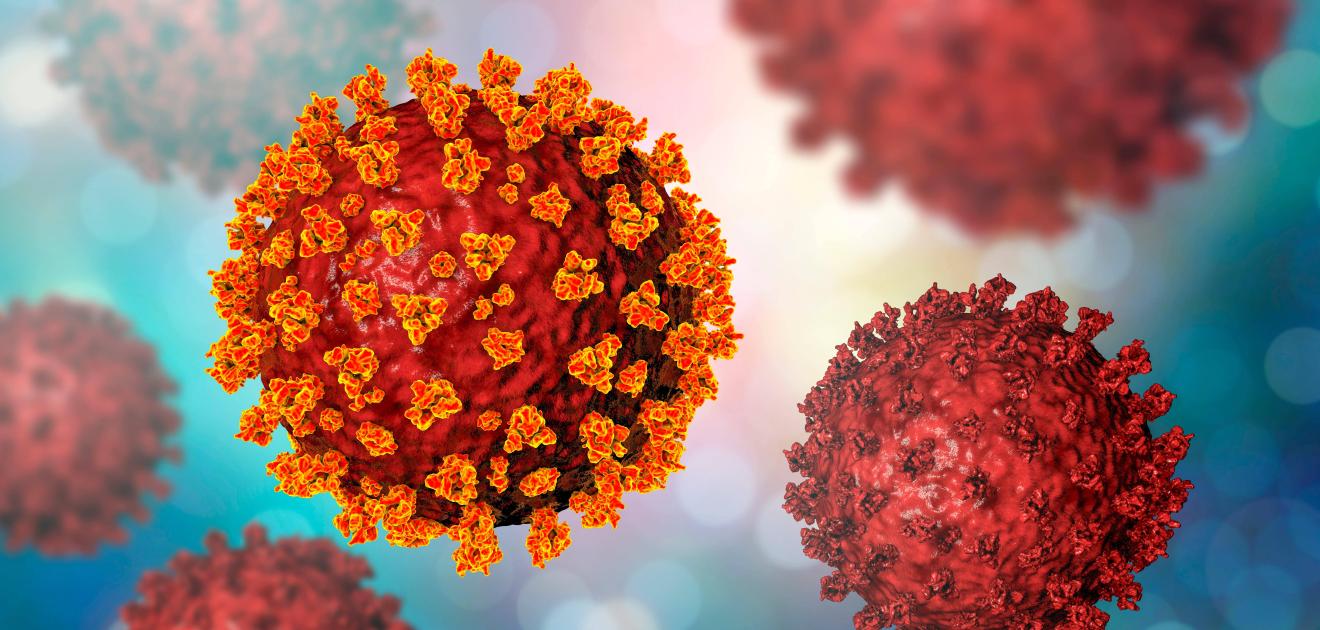
COVID-19: 9 confirmed cases of the SARS-CoV-2 Omicron variant (B.1.1.529) detected in France
As of December 3, 2021, seven confirmed cases of infection with the Omicron variant have been identified in five regions of mainland France and two in Réunion. Other suspected cases in France are currently under investigation.
See also
Classification of Omicron (B.1.1.529): SARS-CoV-2 variant of concern (World Health Organization)
Threat Assessment Summary: Implications of the emergence and spread of the SARS-CoV-2 B.1.1.529 variant of concern (Omicron) for the EU/EEA (European Centre for Disease Prevention and Control)
As of 8 a.m. on Friday, December 3—just a few days after the first case of the Omicron variant was detected in Réunion on November 29, 2021—nine cases have been confirmed in France (seven in mainland France and two in Réunion). Following these first cases on French territory, Santé publique France has developed a case definition for Omicron variant infections that supplements the current case definition for SARS-CoV-2 infections. Objectives: to prioritize contact tracing efforts, sequencing guidelines to confirm the presence of this variant, and prevention messages for patients and their at-risk contacts.
Guidance on how to proceed will also be made available in the coming days.
In its next risk analysis conducted as part of variant surveillance, Santé publique France will present a comprehensive overview of the available knowledge on the Omicron variant. These risk assessments are conducted regularly by Santé publique France and the National Reference Center (CNR) for Respiratory Infectious Viruses in collaboration. They focus on the various SARS-CoV-2 variants identified in France and internationally, based on available information regarding their spread and characteristics.
What do we know about the Omicron variant?
Classified by the World Health Organization as a variant of concern (VOC), the Omicron variant and its potential effects on the epidemic are currently being evaluated by Santé publique France, the CNR Virus des infections respiratoires, and partners of the EMERGEN consortium, in collaboration with the international scientific community. To date, we know that it has 32 mutations, insertions, or deletions in the spike protein, including notably the N501Y mutation, which has been associated with increased transmissibility in the Alpha, Beta, and Gamma variants. Other mutations could impact the effectiveness of the immune response. It also contains mutations that have not been widely detected until now. “The potential effects of each of these mutations, but especially their combined effect—which cannot be interpreted as the sum of the effects of each individual mutation—are currently being studied.”
Where is the Omicron variant circulating?
As of December 2 at 6:00 p.m., 330 cases of B.1.1.529 had been submitted to the international GISAID database (Table 2). The first detection came from a sample collected on November 9, 2021. The majority of cases (172/330) were detected in South Africa, including 149 in the province of Gauteng (the province where Johannesburg is located). Since November 19, cases have been detected in other South African provinces: 4 cases in KwaZulu-Natal, 16 cases in the Western Cape, 1 case in the Eastern Cape province, and 2 cases in the Mpumalanga province. In Africa, 19 cases of Omicron have also been identified in Botswana and 33 cases in Ghana.
In Europe, confirmed cases of infection with the Omicron variant have been reported by Germany (9), Austria (3), Belgium (1), Denmark (4), Spain (1), Ireland (2), Italy (2), the Netherlands (13), Portugal (13), the United Kingdom (22), the Czech Republic (1), Sweden (3), and Switzerland (1, data as of 12/1 at 6:00 p.m.). Cases of infection with the Omicron variant have also been detected in other regions of the world: Australia (9), Brazil (3), Canada (3), South Korea (3), the United States (1), Hong Kong (8), India (2), Israel (1), and Japan (2, GISAID data as of December 2 at 6:00 p.m.). Overall, the majority of confirmed Omicron cases outside Africa involve travelers returning from South Africa or other African countries (Egypt, Malawi, Mozambique, Namibia, Nigeria, Zimbabwe).
Situation in France
As of 8 a.m. on December 3, nine confirmed cases of infection with the Omicron variant had been identified in France. These cases are being closely monitored by health authorities to ensure contact tracing and disseminate prevention messages with the aim of protecting public health.
How can the Omicron variant be detected?
The Omicron variant may be suspected when the three mutations included in the current screening strategy are not detected. This serves as an indicator for identifying suspicious samples. These samples are then subjected to full viral genome sequencing, which is the only way to confirm the presence of this new variant.
All sequencing results generated at the national level are monitored in real time: this is what enables the detection of the potential emergence of this new variant in France.
How is the Omicron variant being monitored?
As part of the national genomic surveillance strategy led by the EMERGEN consortium, coordinated by Santé publique France and ANRS | Emerging Infectious Diseases, a new sequencing indication has been added to establish an additional system for the rapid detection and surveillance of possible cases of infection with the Omicron variant (B.1.1.529). Thus, clinical laboratories send to the consortium’s laboratories for sequencing any sample that has tested positive by PCR and:
associated with a return from travel to Southern Africa
or
have been in close contact with a person returning from that region
or
for which the results of screening PCR tests suggest the Omicron variant.
Particular attention is being paid to Réunion and Mayotte due to their geographical proximity.
In France, variant surveillance is based on a multi-tiered strategy:
systematic screening of positive test results to enable reactive surveillance;
complete viral genome sequencing, as part of the strategy implemented by the EMERGEN consortium, including Flash investigations;
enhanced, multi-source epidemiological surveillance to identify any epidemiological signals (such as an increase in incidence) that could also serve as an alert.
InfoCovidFrance: The Daily Dashboard for Tracking the COVID-19 Pandemic
Santé publique France has made InfoCovidFrance, its new dashboard for tracking the COVID-19 pandemic, available to the public, providing easy and informative access to all the indicators it produces.
Coronavirus: Circulation of SARS-CoV-2 Variants
Many variants of SARS-CoV-2 are circulating in France, and new variants carrying mutations are regularly identified. How are they monitored and classified? Learn all about the...
Stay informed about the COVID-19 pandemic in France and around the world
Updates, Q&As, expert interviews... everything you need to know about the novel coronavirus (SARS-CoV-2) and COVID-19 in France and around the world












