


World AIDS Day. Launch of a prevention campaign to promote testing services.
cp-vih-281117.pdf
Download (PDF - 492.4 KB)
To mark World AIDS Day, the Ministry of Solidarity and Health and Santé publique France are launching a prevention campaign aimed at promoting HIV testing services. The goal is to raise awareness of the various testing methods available and their advantages. Each year in France, approximately 6,000 people discover they are HIV-positive, more than a quarter of whom are at an advanced stage of infection. Furthermore, an estimated 25,000 people are unaware of their HIV status: approximately 40% are men who have sex with men (MSM), 40% are heterosexual migrants, mainly from sub-Saharan Africa, and 20% are heterosexuals born in France. These individuals therefore do not receive effective treatment and may unwittingly transmit the virus to others. Identifying undiagnosed individuals and reducing the time between infection and diagnosis are major public health objectives.In 2016, according to data from Santé publique France, the number of new HIV diagnoses is estimated at approximately 6,000, 27% of which were made at an advanced stage of infection. The overall number of new diagnoses decreased by 5% compared to 2013 but remains stable among MSM (2,600 in 2016¹). MSM and heterosexuals born abroad (three-quarters of whom were born in a sub-Saharan African country) remain the two most affected groups, accounting for 44% and 39% of diagnoses in 2016, respectively. Heterosexuals born in France and people who inject drugs account for 15% and 1%, respectively. The latest data published in a special issue of the Weekly Epidemiological Bulletin confirm that, to help reduce the number of infected but undiagnosed individuals, existing screening measures are complementary. Thus, in 2016: The number of serological tests performed by clinical laboratories increased by 3% between 2014 and 2016. The proportion of confirmed positive serological tests was 2 per 1,000. Rapid diagnostic tests (RDTs) accounted for a smaller number of tests, but the positivity rate was higher (8.7 per 1,000).Data from mandatory HIV reporting show that co-infections with sexually transmitted infections (STIs) are common at the time of HIV diagnosis or within the 12 months preceding that diagnosis. They underscore the importance of combining HIV screening with screening for other STIs. In the context of diversified prevention, it is particularly important to repeat STI testing to treat patients and their partners. In recent years, testing options have expanded. There are now four ways to get tested for HIV and/or STIs: On December 1, the Ministry of Solidarity and Health and Santé publique France are launching a prevention campaign featuring four visuals highlighting the benefits of each testing method, with the tagline "HIV testing methods adapt to your life." The goal is to break down psychological barriers—such as the stress of waiting for results or the fear of being stigmatized—and practical barriers—such as the difficulty of finding time or securing an appointment. The campaign is aimed at everyone, including populations most at risk for HIV (men who have sex with men and migrants from sub-Saharan Africa). It takes the following forms: The campaign visuals are also available as postcards for healthcare professionals wishing to inform their patients. The entire campaign directs people to their primary care physician and the Sida-Info-Service website for more information.
Recent data confirm the complementary nature of France's screening services
5.4 million HIV serology tests were performed by clinical laboratories,
56,300 rapid diagnostic tests (RDTs) were performed by nonprofit organizations,
74,650 HIV self-tests were sold in pharmacies.
A diverse range of testing options that meets everyone’s needs
Testing at a medical laboratory is covered by insurance with a doctor’s prescription, and screening for other STIs is also available there (by prescription).
Testing at a CeGIDD (free center for information, screening, and diagnosis of HIV, hepatitis, and STIs) is free, anonymous, and walk-in, and these centers also offer testing for other STIs.
The TROD (Rapid Diagnostic Screening Test) offered by community organizations is free, anonymous, provides quick results, and includes support from trained prevention specialists.
Self-tests, available at pharmacies, allow you to test yourself and get a quick result whenever and wherever you want.
"The sooner you know your HIV status, the greater the benefit. The benefit is both individual and collective, as the risk of transmitting HIV to a partner is virtually zero for someone on treatment with an undetectable viral load. But the only way to know your HIV status is through testing. It is a major prevention tool for controlling the epidemic. Today, testing options are diverse and tailored to individual needs. However, they remain underutilized," notes François Bourdillon, Director General of Santé publique France.
A new campaign highlighting the various testing options
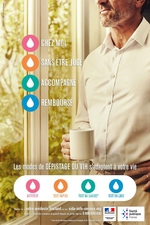
digitally from November 30 to December 20;
via public posters from November 30 to December 17, visible to the general public and priority groups.
Learn more
1 Source: Weekly Epidemiological Bulletin "World AIDS Day," December 1, 2017 "No. 29-30 | November 28, 2017"
Our latest news

news
Call for Nominations for the Renewal of the Scientific Advisory Board of the...

news
Growing Up with Screens. A special report in *La Santé en action* No. 474,...

news












