


How can you prevent carbon monoxide poisoning in the winter?
cp-prevention-intoxication-co-281016.pdf
Download (PDF - 529.67 KB)
As temperatures drop, the risk of carbon monoxide (CO) poisoning increases. Every year, this toxic gas is responsible for about 100 deaths in France. Invisible, odorless, and non-irritating, carbon monoxide is undetectable. However, simple precautions can help reduce the risk.
Appliances that use fuels (natural gas, wood, coal, fuel oil, butane, propane, gasoline, or kerosene, etc.) to produce heat or light can all produce carbon monoxide (CO) if they are not operating under ideal conditions.
Carbon monoxide poisoning can affect anyone. To minimize the risks, take the following precautions:
Before winter, have your heating and hot water systems, as well as your chimney flues (mechanical sweeping), systematically inspected and maintained by a qualified professional;
Every day, even when it’s cold, ventilate your home for at least 10 minutes;
keep your ventilation systems in good working order and never block air inlets or outlets;
Always follow the manufacturer’s instructions for using combustion appliances: never run space heaters continuously; always place generators outside buildings; never use appliances not intended for heating—such as stoves, braziers, or barbecues—for heating purposes.
At the community level: organizers of gatherings (such as cultural or religious events, or family reunions) must be particularly vigilant. Carbon monoxide poisoning linked to the use of gas heaters is common and affects several hundred people in France each year.
Symptoms of carbon monoxide poisoning
Symptoms—headaches, fatigue, nausea—appear more or less quickly and can affect several people in the household. Severe poisoning can lead to coma and death, sometimes within minutes. It is therefore essential to act very quickly: if poisoning is suspected, ventilate the area immediately, turn off combustion appliances if possible, evacuate the premises, and call emergency services by dialing 15, 18, or 112 (and 114 for the hearing impaired).
Treatment for those affected by carbon monoxide poisoning must begin quickly, as soon as the first symptoms appear, and may require hospitalization.
2015/2016 Poisoning Report
Between September 1, 2015, and March 31, 2016, 829 accidental CO poisoning incidents involving 3,520 people were reported to the Santé publique France surveillance system, despite the mild weather conditions of last winter—one of the warmest since 1900, according to Météo-France.
Between September 1, 2016, and October 17, 2016, 79 cases of carbon monoxide poisoning reported to the Santé publique France surveillance system affected 247 people.
A brochure to inform about protective measures
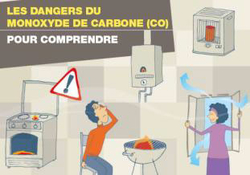
The brochure "The Dangers of Carbon Monoxide: What You Need to Know" explains the dangers of this gas, the appliances and systems that can emit CO, and provides practical advice on how to prevent poisoning.
It is distributed to city halls, maternal and child health services (PMI), medical testing laboratories, and more, and is available for everyone to download at http://inpes.santepubliquefrance.fr (Health and Environment section). Find all the information and documentation from Santé publique France: /
For more information:
Ministry of Social Affairs and Health: http://social-sante.gouv.fr/sante-et-environnement/batiments/article/intoxications-au-monoxyde-de-carbone
Santé publique France: - Information tools: /10000/themes/sante_environnement/monoxyde-carbone/outils-information.asp
Monitoring of carbon monoxide poisoning: /Thematic-files/Environment-and-health/Carbon-monoxide-poisoning
The Dangers of Carbon Monoxide

Les dangers du monoxyde de carbone, qu'est-ce que c'est ?

Les dangers du monoxyde de carbone, des gestes simples pour les éviter
Our latest news

news
Call for Nominations for the Renewal of the Scientific Advisory Board of the...

news
Growing Up with Screens. A special report in *La Santé en action* No. 474,...

news












