


Fetal Alcohol Syndrome: To avoid any risk, “no alcohol during pregnancy”
cp-alcool-foetal-050916.pdf
Download (PDF - 386.23 KB)
To mark World Fetal Alcohol Syndrome (FAS) Awareness Day on September 9, Santé publique France and the Interministerial Mission for the Fight Against Drugs and Addictive Behaviors (Mildeca) are launching a major multi-channel information campaign running from September through the end of November. The goal is to highlight the harmful effects of alcohol consumption during pregnancy and the need to adopt the “zero alcohol during pregnancy” mindset. In France, the risks associated with alcohol consumption during pregnancy remain unclear to many, and the "zero alcohol during pregnancy" message is not always understood as total abstinence or perceived as an absolute necessity.
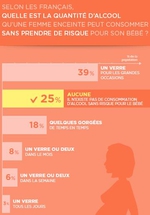
Three-quarters of French people are still unaware of the risks involved
Data from the latest survey¹ conducted by Santé publique France show that only 25% of French people agree that there is no level of alcohol consumption during pregnancy that is risk-free for the child. It is therefore essential to reiterate that alcohol is toxic to the fetus and can lead to various complications (growth retardation, damage to the central nervous system, birth defects, etc.), of which fetal alcohol syndrome is the most severe form.
A powerful message: "You drink a little, he drinks a lot"
Santé publique France and Mildeca are launching a large-scale information and awareness campaign—spanning media, non-media, and digital channels—targeted at healthcare professionals and pregnant women.
New materials (posters and brochures) will be distributed to primary care providers (general practitioners, gynecologists, midwives, pharmacists, etc.) in mainland France and the French overseas departments. The message is very clear: “You drink a little, he drinks a lot.”
The leaflet “Zero Alcohol During Pregnancy” answers the most common questions: “Does alcohol pass into the baby’s bloodstream?” “Is there a safe amount of alcohol for the fetus?”… and directs readers to healthcare professionals or the Alcool Info Service remote assistance program for more information.
Two poster designs, “You drink a little, he drinks a lot,” are available, encouraging the public to discuss the issue of alcohol during pregnancy with a healthcare professional.
The information campaign also includes:
press ads placed in targeted “family” magazines from September to November,
articles in blogs focused on motherhood,
the inclusion of the "Zero Alcohol During Pregnancy" brochure in maternity kits, distributed to pregnant women during the first and second trimesters of pregnancy.
Alcohol problems during pregnancy: help from Alcool Info Service
For women struggling with alcohol, the information campaign also highlights the option to seek help from the Alcool Info Service remote support program. This initiative is part of the government’s plan to combat drugs and addictive behaviors and provides access to support from a professional experienced in assisting this population 7 days a week.
The website also features an “Alcohol & Pregnancy” section that provides expectant mothers with answers to questions they may have, such as “I’m pregnant—can I drink?” and “I can’t seem to stop drinking.”
Two educational videos produced in collaboration with healthcare professionals clearly explain the recommendations and offer practical help for those facing difficulties.
The harmful effects of alcohol should not be downplayed. Alcohol consumption is the second leading cause of preventable death in France.
1 Survey conducted by BVA for Santé publique France from June 25 to 27, 2015, among a representative sample of the French population consisting of 1,005 individuals aged 15 and older
2 Guérin S, Laplanche A, Dunant A, Hill C. Alcohol-attributable mortality in France in 2009. BEH, 2013, No. 16-17-18: pp. 163–168.
Our latest news

news
Shamonda Virus: First Human Case Detected in France—What Do We Know?

news
Call for Nominations for the Renewal of the Scientific Advisory Board of the...

news












