


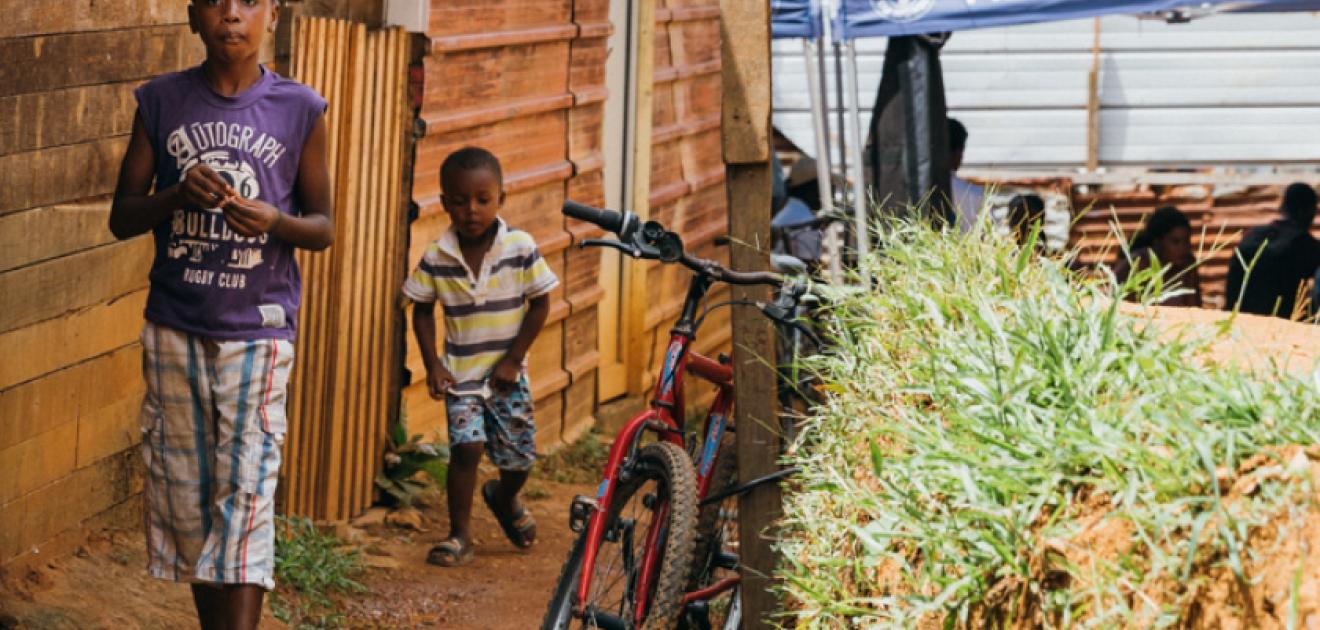
“Reaching Out” to Promote Public Health. The feature article in *La Santé en action* No. 458, December 2021.
In the December 2021 issue of its quarterly journal *La Santé en action*, Santé publique France publishes a special feature on the “outreach” approach to promoting public health so that people can enjoy their fundamental rights.
Subscribe to the magazine
To receive the newsletter via email announcing each new issue and providing free access to the issue
To improve public health, health, social, and educational services alone are not enough: some citizens are unable to access care and preventive services. If we want them to benefit from these services, we must reach out to them where they live. The “outreach” approach is thus at the heart of social work and is grounded in an ethic that respects the free will of the people we seek to support. It reaches out to those excluded from the healthcare system without waiting for them to ask for help, preferably before difficulties become entrenched, but without imposing ourselves or passing judgment.
The “reaching out” approach is not limited to people living on the streets or in other undignified conditions (squats, shantytowns). It is relevant for any individual or group that is isolated or has difficulty accessing care and their full range of rights. Regardless of the population involved and the field of intervention, “reaching out” means, above all, respecting people’s wishes.
An approach particularly suited to the COVID-19 crisis
Since March 2020 and the onset of the COVID-19 pandemic, which has further isolated the most vulnerable populations, the “reaching out” approach has become particularly relevant—even essential. In this context, social workers supported by institutions, public services, hospitals, cities, local governments, and the entire network of nonprofit organizations have significantly expanded such interventions. These interventions are useful for building connections, providing information, reducing the risk of health and social harm, enabling people to request support, helping them access relevant services (health, social, administrative, etc.), and overcoming any reluctance to use these services. They strengthen people’s ability to access mainstream services on their own.
Moving toward: a tailored response to combat social and regional health inequalities
Examples in mainland France
This issue summarizes the current state of knowledge and presents diverse examples from mainland France and the overseas departments. It illustrates that the “reaching out” approach is emerging as an essential and tailored response to combat social and territorial health inequalities, and that its methods offer numerous advantages:
the ability to intervene quickly;
early identification of situations or conditions;
a role as an interface between the user and institutions or care providers.
Topics covered include the vaccination of homeless individuals against COVID-19; government support for this “outreach” approach through the allocation of nearly 60 million euros to the development of multidisciplinary mobile teams; the reintegration of “young people who have fallen through the cracks” through the Mulhouse Local Mission; support for tenants in severe financial difficulty; and the experimental program for home care of the elderly led by the Red Cross, which aims to prevent elderly people from being forced to enter a residential care facility for dependent seniors.
… and overseas
This issue also focuses on specific long-term support (psychological, social, and integration-based) to help people leave prostitution in Martinique, as well as the sexual health prevention bus in Réunion.
Download

magazines/revues
17 January 2025












