Hurricanes Irma and Maria: The response effort continues, with more than 300 reservists deployed to reinforce teams on the ground
Since September 6, 2017, when Hurricanes Irma and Maria struck the French West Indies, the islands of Saint Martin and Saint Barthélemy have been particularly hard hit. Santé publique France has stepped in to support and assist local teams in addressing the impact on the population, homes, water and electricity networks, and healthcare facilities.
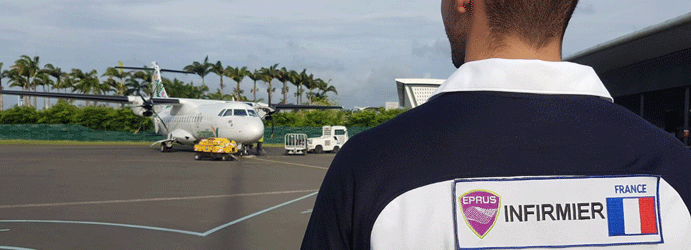
Santé publique France’s response involves deploying medical reservists, health supplies, and biomedical equipment to the affected areas to coordinate these efforts, as well as mobilizing the Regional Intervention Unit (Cire) to handle the epidemiological aspects. Since September 6, 2017, several teams composed of specialized professionals have been taking turns, with a total of more than three hundred reservists, distributed among Saint-Barthélemy, Saint-Martin, and Martinique, working in succession on the ground.
Under the leadership of one or more coordinators, the teams take turns in different affected areas and provide specific assistance based on the needs identified by the initial reconnaissance team. The personnel deployed include: physicians (emergency room doctors, anesthesiologists, general practitioners), medical dispatchers, surgeons, nurses, logisticians, a telecommunications specialist, a psychiatrist, psychologists, pharmacists, pharmacy technicians, epidemiologists, and hospital directors, among others.
On-the-ground assistance tailored to needs
In Guadeloupe, all health and medical-social facilities now have a restored water supply. In Saint Martin, the hospital and two clinics staffed by doctors and nurses from the medical reserve are operational. Mobile medical teams are now operating in the most remote neighborhoods to provide assistance to vulnerable populations. Five shelters set up before Hurricane Irma struck and housing vulnerable people without housing have been visited, and medical care is currently being provided to some of them.
Starting in early October, additional medical and psychological support—comprising psychiatrists, psychologists, and psychiatric nurses—will be deployed for three months to bolster the existing on-site resources.
Assessment of the population’s health status
An assessment of the health status of the population of Saint Martin and Saint Barthélemy prior to the hurricane’s passage is also being conducted by Santé publique France. Data will be collected via the Cire using the agency’s surveillance network (Sursaud, laboratories, sentinel network, etc.).
To document the results of the health surveillance system in place, a special Hurricane Epidemiological Report is issued weekly. Its objective is to present the evolution of the health impact observed following Hurricanes Irma and Maria based on available data sources, as well as to detect potential outbreaks within the population at an early stage. Santé publique France is also mapping potential health risks resulting from Hurricane Irma.
View the 'Special Hurricane' epidemiological report
Prevention
Document available on the Martinique Regional Health Agency website: https://www.martinique.ars.sante.fr/recommandations-sanitaires-irma
Health recommendations:
Tap water is not safe to drink after such a weather event. Drink only bottled water. If you do not have any, boil clear water for 5 minutes, keeping it covered, for food preparation.
Wash your hands frequently, especially before eating (with soap and water); cook food thoroughly; wash fruits.
Wear long, loose-fitting clothing to avoid injury and mosquito bites; use repellents.
When cleaning up or clearing debris, wear gloves and boots.
Check your vaccination records; consult a healthcare professional if you are unsure or think your vaccinations may not be up to date.