


Download
Housing: A Key Determinant of Public Health. Feature article in *La Santé en action*, No. 457, September 2021.
In the September 2021 issue of its quarterly journal *La Santé en action*, Santé publique France publishes a special feature on housing, a major determinant of health and a key lever for improving public health.
Subscribe to the magazine
To receive the newsletter via email announcing each new issue and providing free access to the issue
Access to decent housing is a fundamental right and a major determinant of health, as recognized by the World Health Organization (WHO). This issue of *La Santé en action* provides an overview of the scientific literature on substandard housing and presents programs designed to facilitate access to and retention of decent housing.
Substandard housing: a possible cause of mortality
130,000
estimated deaths associated with inadequate housing conditions each year in Europe
According to WHO Europe, there are nearly 130,000 deaths associated with inadequate housing conditions in Europe each year. In the United Kingdom, it has been established that excess winter mortality is strongly linked to the housing conditions of the population.
Substandard housing is also a cause of mortality during heat waves. In France, if 600,000 substandard homes occupied by households living below the poverty line were renovated—at a cost of 6.5 billion euros—this would result in a reduction in healthcare costs of nearly 500 million euros per year.
Stigmatization and Effects on Mental Health
Living in substandard housing leads to a process of stigmatization, social decline, and loss of self-esteem. The effects of poor housing quality and overcrowding on mental health, anxiety, depression, and aggression have been scientifically demonstrated.
Poor housing also has a major impact on physical health by facilitating the spread of infectious diseases. The presence of mold poses a health risk, particularly causing irritation and respiratory symptoms, especially for at-risk individuals.
Social health inequalities exacerbated by substandard housing
Population health is closely linked to housing quality and location. Certain groups are more vulnerable, such as the elderly or children, and are particularly sensitive to poor housing conditions. Housing is a key determinant of social and regional health inequalities, which compound when housing and the environment are in poor condition.
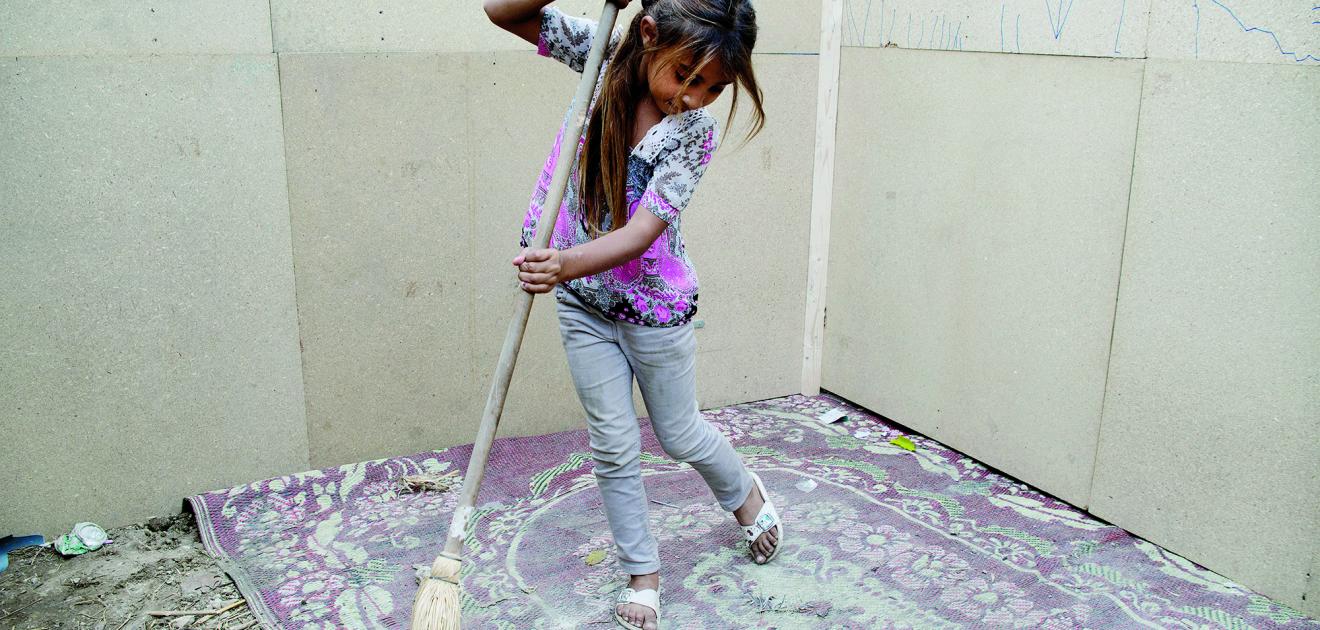
Social inequalities in access to housing particularly affect younger generations, women, and certain minorities such as Travellers, who, according to a recent study, are among those with the poorest housing conditions (including environments that may be contaminated by toxic substances).
Promising Programs to Combat Substandard Housing
Several courses of action regarding substandard housing are presented, including:
The National Fund for Support in Accessing and Maintaining Housing, which supports tenants and applicants for low-income housing (HLM) facing severe economic and social hardship. Read the article.
The Abbé Pierre Foundation’s “SOS Taudis” program, which aims to help households in precarious situations renovate their homes and avoid eviction. Read the article.
In Seine-Saint-Denis, a coalition of organizations assists people in precarious situations with the process of securing housing. Read the article.
Local authorities and regional health agencies (ARS) are also key players in the fight against substandard housing:
In Île-de-France, the Île-de-France ARS is implementing a strategy to combat substandard housing as a way to “reach out” to communities by visiting them to improve their living conditions as part of a comprehensive health approach. Read the article.
In the Lyon metropolitan area, small mobile homes (“tiny houses”) have been set up since the Covid-19 lockdown to house women with their children and minors. Read the article.
In Besançon, urban sanitation services are combating substandard housing, notably by introducing a “rental permit” to address unfit housing. Read the article.
In metropolitan France and the overseas departments, particularly in Réunion, the “A Home First” program provides comprehensive support and permanent housing for the homeless, with a specific program for young people. Read the article.
Substandard Housing, COVID-19, and Lockdown
This issue of La santé en action resonates particularly strongly after 18 months of the COVID-19 health crisis, during which the various phases of lockdown made the home the almost exclusive daily living space for the population.
This period served as a form of collective experience and awareness of the relationship each person has with their home, and the impacts this can have on physical and mental health. Furthermore, the dynamics of the COVID-19 epidemic itself depend on living and housing conditions (overcrowding, the ability or inability to protect oneself, to isolate, to access water sources, toilets, or individual showers) and on neighborhood population density.
The health crisis has particularly highlighted the links between housing and health. It appears that housing conditions have had a significant impact on populations’ exposure to the virus, as overcrowding has acted as a catalyst for the spread of the disease.
Lockdown periods also disrupted the daily routines of households, particularly highlighting situations of domestic and/or spousal violence, as well as difficulties in balancing family and professional lives—all of which have numerous implications for health.
Conversely, certain populations were able to benefit from a more protective environment. The choices—or lack thereof—regarding place of residence prior to the various lockdowns further illustrated the importance that can be placed on one’s living environment and the search for a setting that, while it may not provide maximum well-being, at least minimizes adverse effects.












