Download

Weekly Epidemiological Bulletin, June 2, 2022, Special Issue: Health Recommendations for Travelers, 2022 (for healthcare professionals)
Download

magazines/revues
6 July 2026




Santé publique France has released its annual surveillance data on hepatitis A in France. Also published as open data on Géodes, the data show a low number of reported cases in France for the second consecutive year, likely due to the effects of the COVID-19 pandemic.

thematic dossier
Acute hepatitis A is a viral infection of the liver that is most commonly transmitted through hand contact or by ingesting food or water contaminated with fecal matter. Prevention relies on good hygiene and vaccination. In France, hepatitis A has been a notifiable disease since 2005. Santé publique France monitors the epidemiological trends of hepatitis A and publishes the data from this surveillance annually. This is an opportunity to remind the public that adopting hygiene measures and vaccination remain the most effective preventive measures for limiting the spread of this virus.
In 2021, the number of reported cases of acute hepatitis A remained low following a 2020 already marked by the effects of the COVID-19 pandemic. In fact, 423 cases of acute hepatitis A were reported (compared to 411 in 2020 and 1,379 in 2019), with a reporting rate unchanged from 2020 at 0.6 per 100,000 inhabitants.
This low incidence rate was, as in 2020, linked in particular to:
a lower proportion of cases linked to travel abroad compared to the years preceding the pandemic (28% in 2021, 21% in 2020, and 39% between 2006 and 2019), despite fewer restrictions on international travel in 2021.
Improved hand hygiene and social distancing measures promoted as part of the response to the COVID-19 pandemic, which may have contributed to reduced circulation of the hepatitis A virus.
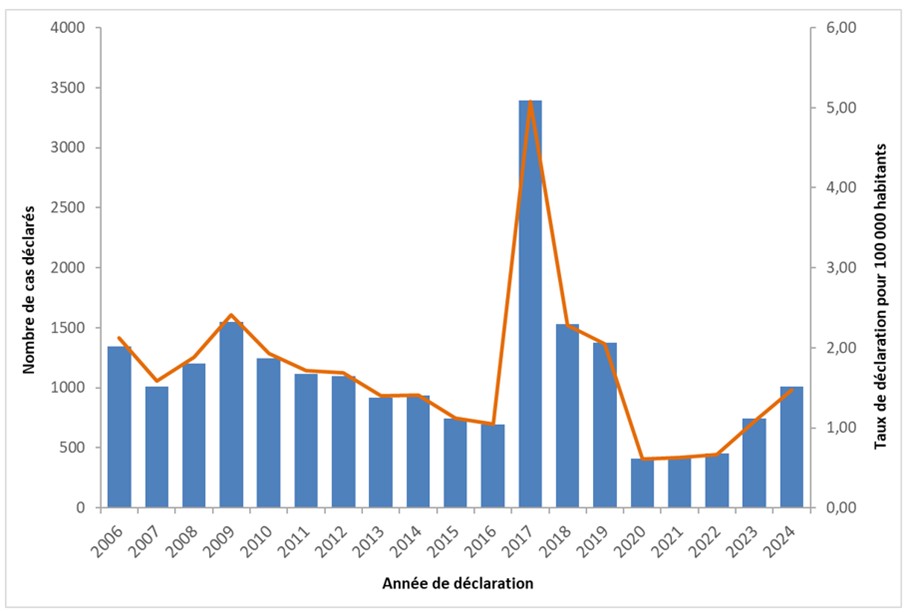
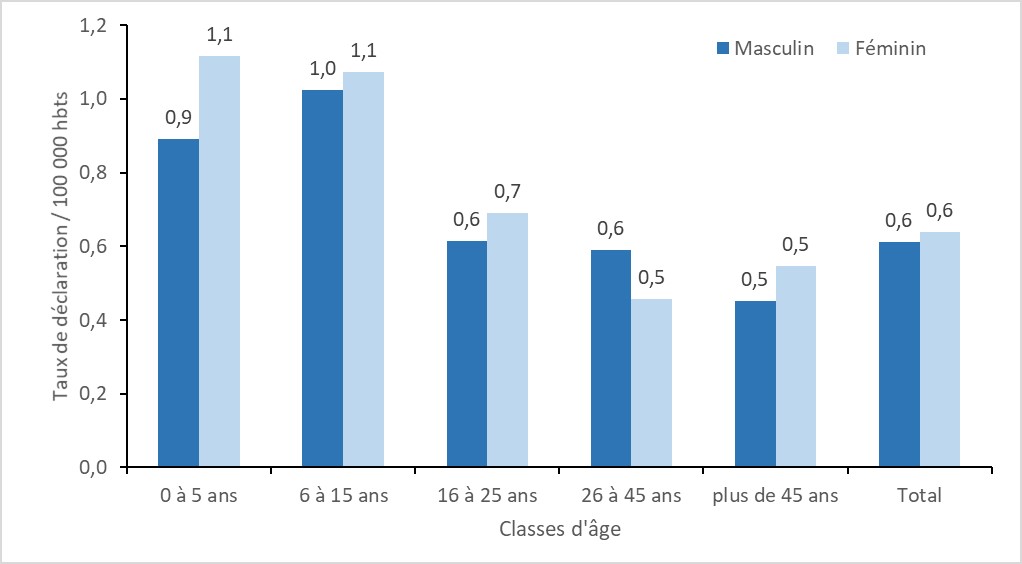
In 2021, reporting rates were comparable among women and men (0.6 per 100,000 population).
The average age of reported cases was 37 years (ranging from 1 to 95 years). Incidence rates by age group were highest among 6- to 15-year-olds (1.1 per 100,000 inhabitants) and 0- to 6-year-olds (1 per 100,000 inhabitants), as is typically observed (with the exception of 2017¹).
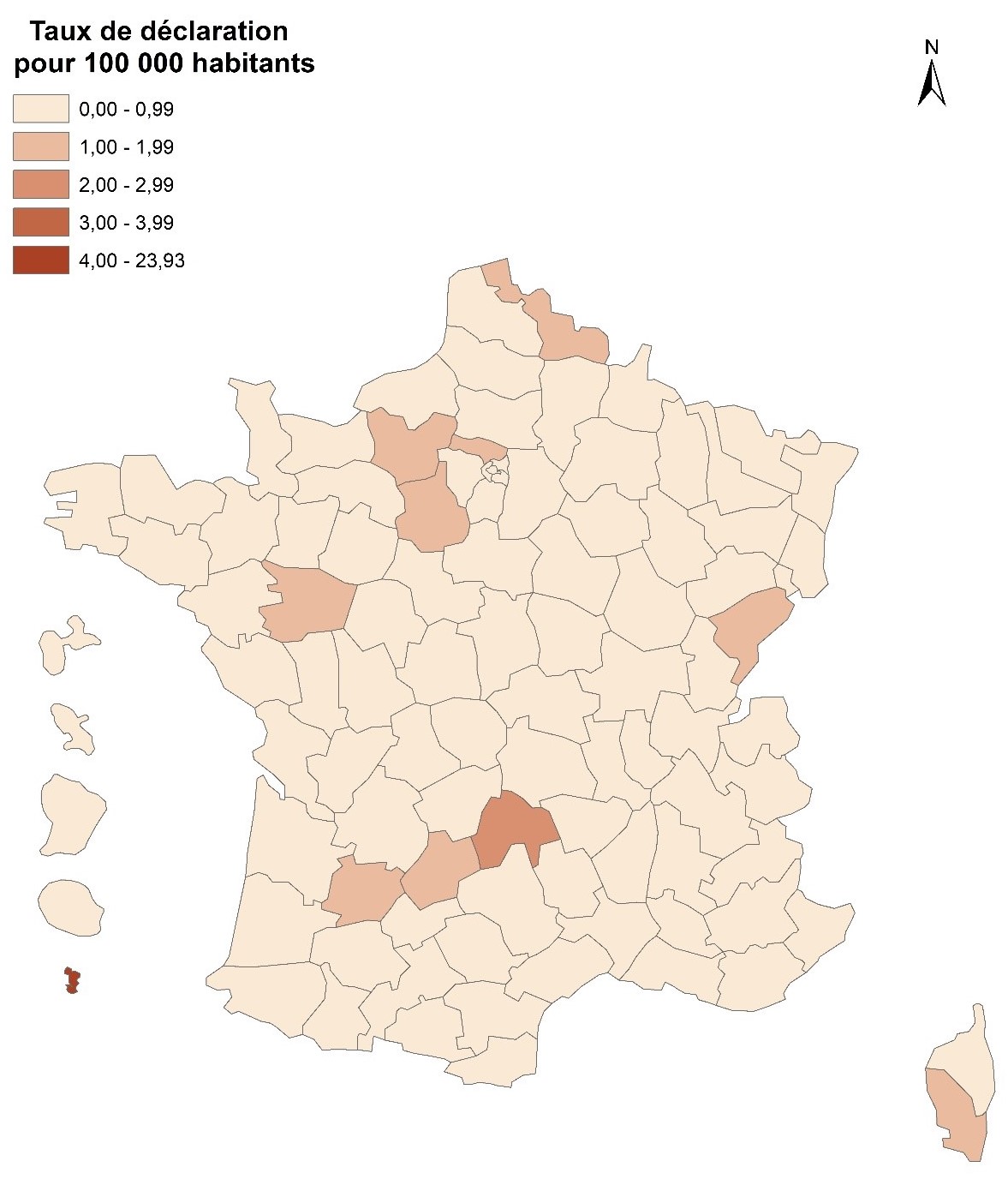
As in previous years, the majority of cases were reported in mainland France, particularly in the Île-de-France region, but the highest reported rate was observed in the overseas department of Mayotte (23.9 per 100,000 inhabitants in 2021).
In the rest of the country, reported rates ranged from 0 (in 22 departments where no cases were reported in 2021) to 2.1 per 100,000 inhabitants (Cantal).
The main risk exposures reported within 2 to 6 weeks before the onset of symptoms were:
a trip abroad (without it being possible to confirm that the infection was imported) (28% of cases);
consumption of seafood (28%);
contact with a case in the immediate circle (22%);
living in the household of a child under 3 years of age (20% of cases).
The proportion of cases possibly exposed abroad, although again the highest, remained low compared to the years preceding the COVID-19 pandemic (47% of cases in 2019), as did the presence of known hepatitis A cases in the immediate environment (33% in 2019).
The significant increase in cases typically reported in September and October following a stay in an endemic area during the summer holidays was still not observed in 2021 due to a possible reduction in international travel, but also a possible decrease in the circulation of the hepatitis A virus in other countries due to hygiene measures promoted to combat the COVID-19 pandemic.
Learn more:
To limit any resurgence of acute hepatitis A, vaccination recommendations remain in effect, advocating for increased vaccination of MSM following the 2017 outbreak, as well as for family members of a confirmed case and during travel to areas with moderate or high endemicity.
Adherence to personal and public hygiene, particularly frequent handwashing with soap and water, also remains essential to limit the risk of hepatitis A transmission.
Download
Download
magazines/revues
6 July 2026
[1] As a reminder, 2017 was marked by an epidemic that particularly affected men who have sex with men
View hepatitis A statistics for the entire country.
What are vaccines for? How do they work? At what age should children be vaccinated? Vaccination-info-service.fr answers the most frequently asked questions about vaccination. A separate...












