


FranceCoag: A 22-Year Prospective Follow-Up of the French Cohort of Patients with Inherited Coagulation Disorders
FranceCoag: A 22-Year Prospective Follow-Up of the National French Cohort of Patients with Inherited Bleeding Disorders
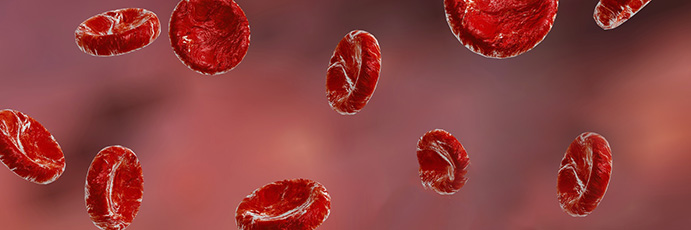
In France, monitoring of patients with bleeding disorders (such as hemophilia) began as early as 1994 due to the risks (infections, development of inhibitors: antibodies that block the treatment’s effect) associated with the products they are injected with to compensate for their deficiency. This open-label prospective cohort, known as FranceCoag, currently includes more than 10,000 patients. It is the result of a collaborative effort between healthcare professionals, health agencies, Inserm, and patients. Santé publique France has made a significant contribution to this project, notably by coordinating it between 2004 and 2016.
The article published this month in the European Journal of Epidemiology describes this cohort and the insights derived from it in detail. It was produced by the Department of Noncommunicable Diseases and Injuries in collaboration with Santé publique France and Prof. Hervé Chambost (AP-HM), who has been coordinating the FranceCoag project since January 2017. The article aims to raise broader awareness of FranceCoag, which serves as a comprehensive database for research.


3 questions for Alexandra Doncarli and Virginie Demiguel, Department of Noncommunicable Diseases and Injuries
Initially focused on the hemophilia population, the cohort was expanded in 2003 to include all coagulation disorders (afibrinogenemia, and deficiencies in factors II, V, VII, X, XI, XIII, and a combined V and VIII deficiency). These patients experience bleeding symptoms with varying frequency depending on the severity of their factor deficiency and follow similar care pathways. Children under 18 with severe hemophilia constitute a sub-cohort called PUPs(1).
This project has the support of nearly all treatment centers (n=33/36) located throughout the country and identified by the Ministry of Health.
Patients are enrolled by clinicians at these centers once a diagnosis has been made, after receiving an information sheet describing the project and being assigned a unique identifier that guarantees their anonymity. Clinicians then collect data from the patients they treat, if possible annually, using a standardized electronic questionnaire. The range of data collected is broad, covering several domains: demographic, clinical, genetic, and biological. It is centralized in a single, secure database located at Santé publique France. Additionally, a blood sample bank has been established. It is currently stored at the Rhône-Alpes EFS (Annemasse, Haute-Savoie).
Within Santé publique France, we coordinated and managed, in close collaboration with the Information Systems Department, the development of the web application ensuring the confidentiality and security of data transmitted by clinicians. Similarly, Santé publique France optimized data quality through the development of automated checks during data entry, by cross-referencing with source records at treatment centers, and by consulting experts. Finally, Santé publique France led the scientific committee for this project and contributed to the analysis of the cohort.
In 2016, three-quarters of the patients in the cohort had hemophilia (74%); the remainder consisted of patients with von Willebrand disease (21%) or another disorder (5%). The cohort is relatively young, as half of the patients are under 32 years of age (IQR(2): 18–50 years). Since 2009, we have been registering an average of 43 new cases per month.
To date, studies based on FranceCoag data have primarily focused on hemophilia, as the inclusion of other conditions—whose eligibility for the cohort is more recent—has not yet been fully established. These studies have provided new insights into the prevalence of hemophilia, its management, and the main complications faced by these patients.
The average prevalence of hemophilia has been estimated at 30 cases per 100,000 live male newborns.
The twenty-two years of follow-up have provided us with sufficient perspective to accurately describe the age of diagnosis for hemophilia, even for mild forms that may not be diagnosed until several years after birth.
It is also evident that the management of young patients has improved with better adherence to recommendations regarding the initiation of preventive treatment (prophylaxis), thereby protecting patients’ joints.
The subjects included in this cohort, like other French patients with bleeding disorders, were affected by the infection risks associated with treatments administered in the 1980s, with 1 in 5 patients still infected with HCV and/or HIV today. Currently, manufacturing processes have reduced this risk to virtually zero. The types of treatment used are now predominantly derived from genetic engineering and are not without side effects.
Thus, data from the PUPs sub-cohort, comprising nearly 650 children in 2016, have been used in several studies (including a European meta-analysis) to understand the risk factors for the development of inhibitors associated with these new treatments.
Internationally, FranceCoag is considered by the World Federation of Hemophilia (WFH) to be a particularly valuable tool for advancing knowledge in the field of the epidemiology of these rare diseases.
Santé publique France remains involved in this project through the neurological surveillance protocol for individuals with coagulation disorders, as all patients enrolled in FranceCoag participate in it. It is implemented by the National Surveillance Network for Creutzfeldt-Jakob Disease and Related Disorders in close collaboration with the Infectious Diseases Division.
Santé publique France also remains a member of the project’s steering committee, which decides on major policy directions and decisions regarding FranceCoag.
Since January 2017, the project has been taken over by a team of clinicians and researchers within the AP-HM. This team has high ambitions for the project and is considering several changes, including:
Cross-referencing with other national medical-administrative databases to improve the completeness of data entries.
Collecting first and last names in an independent database to facilitate the identification of potential duplicates and the collection of patients’ vital status and causes of death, where applicable.
Expanding inclusion criteria to other conditions: combined hereditary deficiencies in vitamin K-dependent factors, and hereditary platelet disorders.
Collecting information regarding patients’ quality of life.
Creating a link between the various databases listing patients with rare diseases to facilitate data collection by the relevant teams.
FranceCoag has always been and will remain open to collaborations following the submission of proposals to the scientific committee and approval by the steering committee.
For more information, please contact the coordinating center at the following address: francecoag@ap-hm.fr
(1) PUPs stands for Previously Untreated Patients.
(2) IQR (Interquartile range)
(1) Doncarli A, Demiguel V, Guseva Canu I et al. FranceCoag: a 22-year prospective follow-up of the national French cohort of patients with inherited bleeding disorders. Eur J Epidemiol (2018).












