


Alcohol consumption and perceptions of alcohol-related cancer risks: data from the 2015 Cancer Barometer
In France, approximately 15,000 people die each year from cancer attributable to alcohol consumption. The "Alcohol and Cancer" chapter of the 2015 Cancer Barometer examines alcohol consumption among the French population, as well as their perceived level of information regarding the health effects of alcohol, their perceptions and opinions regarding the dangers of alcohol, and the cancer risk it poses.
Alcohol is the second leading preventable risk factor for cancer after tobacco. A study showed that in 2015, nearly 28,000 new cases of cancer were attributable to alcohol consumption. Among these, breast cancer is the most common (8,081 new cases), followed by colorectal cancer (6,654 cases), oral and pharyngeal cancer (5,675 cases), liver cancer (4,355 cases), esophageal cancer (1,807 cases), and laryngeal cancer (1,284 cases). Scientific research shows that any regular consumption, even in small amounts, poses a cancer risk, regardless of the type of alcoholic beverage. In 2017, a group of experts convened by Santé publique France and the National Cancer Institute therefore proposed revising the alcohol consumption recommendations issued to the general public.
Reported consumption
In 2015, 8 out of 10 adults reported having consumed alcohol in the past year: 43.9% every week and 8.0% every day. This consumption is more frequent among men than among women: 86.6% and 75.5% for annual consumption, respectively; 56.5% and 32.3% for weekly consumption; and 12.3% and 3.9% for daily consumption. Since 2005, the trend in daily consumption has been declining, primarily among older adults.
Perceptions of information, cancer risk, and the dangers of alcohol
87.6% of adults who have never been treated for cancer consider themselves well-informed about the health effects of alcohol, regardless of gender and age, and this proportion increases slightly with educational attainment. Furthermore, drinkers feel better informed about the health effects of alcohol than abstainers. Daily drinkers are less likely both to perceive a cancer risk and to consider it important to reduce or limit alcohol consumption in the event of cancer.
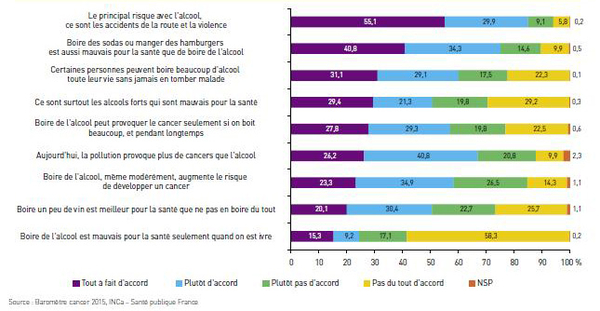
The results presented in the 2015 Cancer Barometer show relative stability in perceptions and opinions since 2005. The majority of French people feel well-informed about the effects of alcohol, even though opinions—which are strongly influenced by social factors—reveal a significant tendency to downplay the health risks. Thus, the most disadvantaged individuals feel less well-informed and are more inclined to downplay this risk compared to other types of dangers and to feel that they can avoid it. In terms of prevention, efforts must be intensified and tailored to the most disadvantaged populations in order to reduce social health inequalities.
Opinions on the dangers of alcohol among 15- to 85-year-olds in 2015
For more information
Cogordan C, Richard JB, Andler R, Ancellin R, Deutsch A. Cancer Barometer 2015. Alcohol and Cancer. Behaviors, Opinions, and Risk Perceptions. Saint-Maurice: Santé publique France, 2018. 16 p.












