
infographics
The Story of a Food Recall
How does a food safety alert work in France? What is the organizational structure? Santé publique France outlines the process—from patient consultation to the issuance of an alert—in an infographic.




Santé publique France has released the 2019–2020 annual winter surveillance report on acute gastroenteritis in metropolitan France, which was marked by two major developments, including a historic decline in acute gastroenteritis cases not seen in the past 10 years.

thematic dossier
Winter acute gastroenteritis (AGE) is primarily viral in origin, with noroviruses and rotaviruses being the most common. Noroviruses cause AGE in people of all ages, while rotaviruses primarily affect children under 5 years of age. A winter surge in cases is observed every year in France, as in Europe, leading to an increase in medical consultations for AGE, typically between December and April. A peak is often observed during the first two weeks of January.
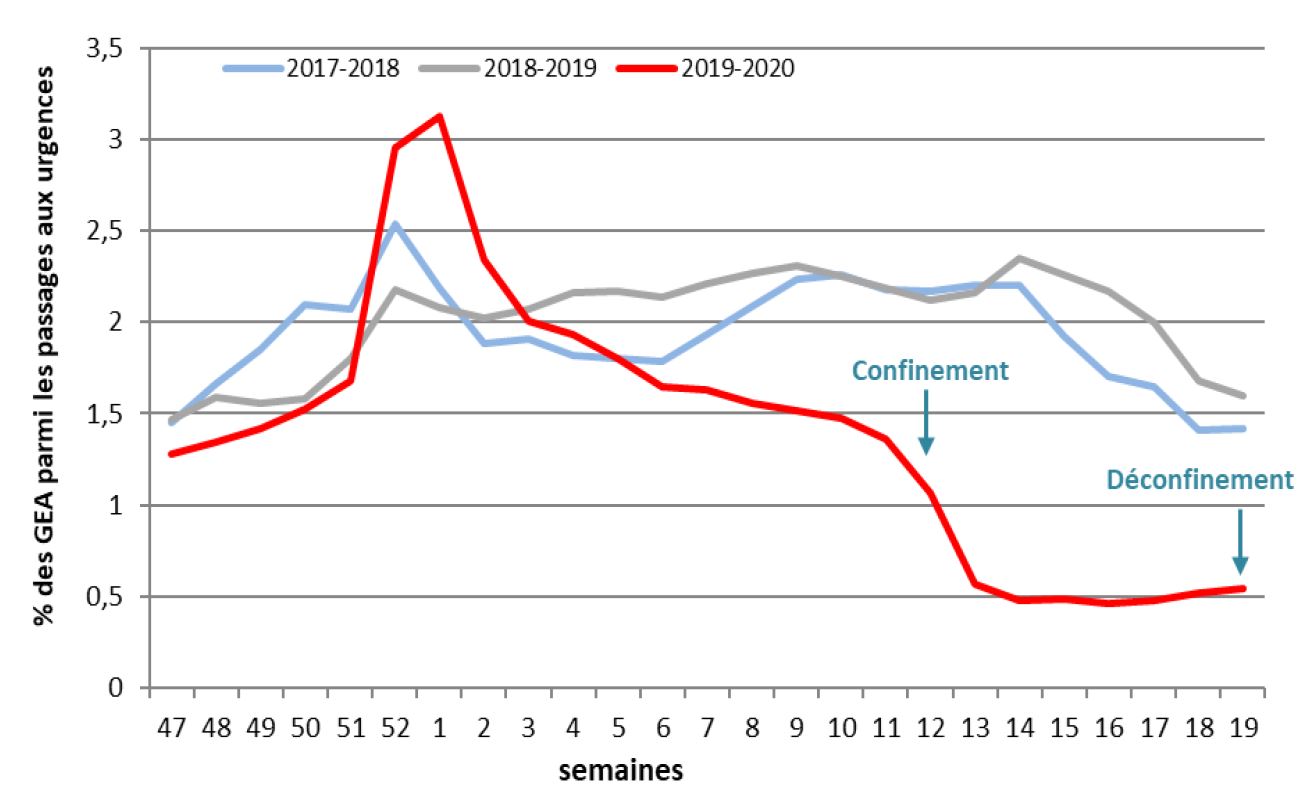
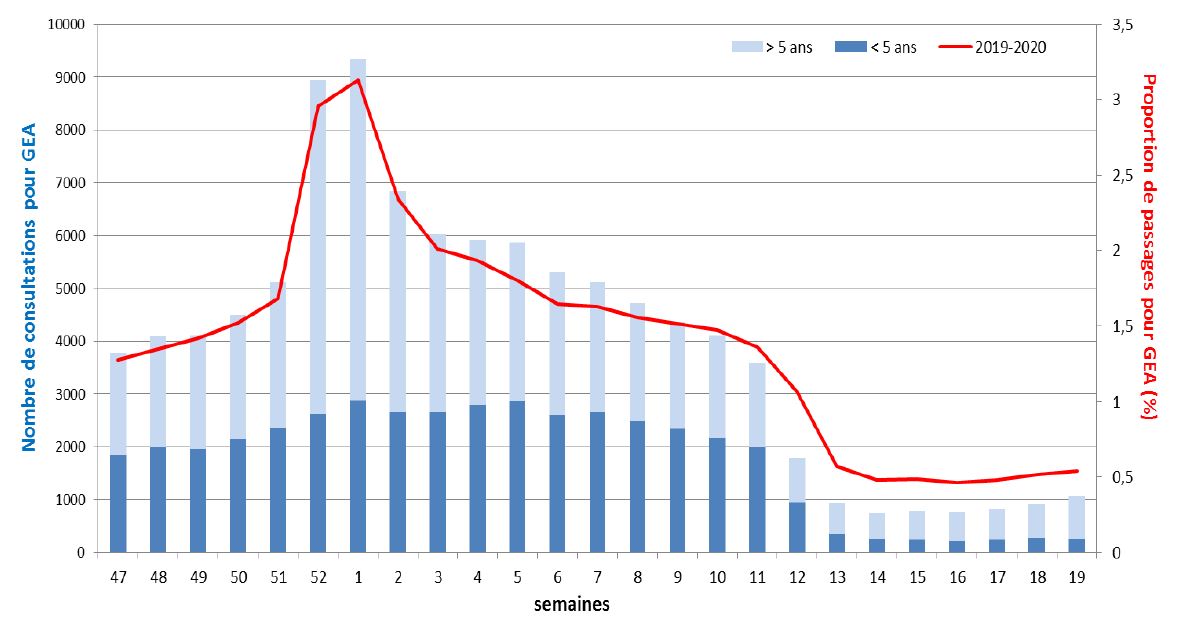
As in the two previous seasons, an increase in the number of GEA cases was observed at the start of the winter season, followed by a sharp rise in visits to hospital emergency departments and primary care clinics in late December 2019 - early January 2020, exceeding the peaks of the previous seven seasons in week 01-2020, and reaching 3.1% of total activity in hospital emergency departments.
This resurgence in the number of GEA cases coincided with a significant and unusual outbreak of foodborne illnesses affecting several metropolitan areas, linked to the consumption of contaminated oysters in 2019* during the holiday season.
Following the first lockdown (March–April 2020) implemented in response to the COVID-19 pandemic, very low levels of GEA activity were recorded starting in March and April 2020 in hospital emergency departments and general practice (Sentinelles Network and SOS Médecins).
In fact, the proportion of emergency department visits for gastroenteritis dropped sharply in early 2020, reaching historically low levels, and then stabilized at 0.5% of activity starting in April 2020. According to data from the Sentinelles Network, the 2019–2020 winter season was characterized by the lowest cumulative incidence rate of acute diarrhea cases seen in general practice over the past 10 seasons.
This historic decline in epidemic activity for acute gastroenteritis in France is most likely linked to the measures implemented in response to the COVID-19 pandemic (lockdown, physical distancing, enhanced hand hygiene). Such levels have not been observed in 10 years of retrospective data for any of the surveillance indicators.
The analysis period corresponds to the winter surveillance period, from November 18, 2019, to April 13, 2020.
96,713 hospital emergency department visits, representing 1.6% of all emergency department visits. 44.4% of visits for acute gastroenteritis involved children under 5 years of age.
144,499 SOS Médecins consultations for acute gastroenteritis, representing 8.7% of total consultations.
Cumulative incidence rate in the Sentinelles Network:
2,963 cases per 100,000 inhabitants across all age groups
6,605 cases per 100,000 inhabitants among children under 5 years of age, the most affected population during this period.
Predominance of norovirus genotype GII.4 2012[P16], followed by genotype GII.17[P17].
A significant peak in activity was observed in late December 2019–early January 2020, coinciding with a major resurgence of foodborne outbreaks linked to the consumption of oysters
Following the first lockdown implemented in response to the COVID-19 pandemic, very low levels of activity were recorded starting in week 13 of 2020
Learn more

bulletin national
28 April 2021
Learn more

Santé publique France reminds the public of the preventive measures to adopt on a daily basis, as well as measures to prevent the main complication of acute gastroenteritis: dehydration, which can be particularly serious in infants and the elderly.
Wash your hands frequently (preferably with soap and water, or an alcohol-based hand sanitizer) for 30 seconds, scrubbing your nails and fingertips. This is one of the best ways to limit the spread of enteric viruses.
Thoroughly and regularly clean surfaces at high risk of transmission (in pediatric wards, daycare centers, and facilities caring for the elderly), as certain viruses (rotavirus and norovirus) are highly resistant in the environment.
Rehydrate early using oral rehydration solutions (ORS), particularly in infants, to prevent complications from acute diarrhea.
Monitoring the epidemiological trends of acute viral gastroenteritis
Informing the general public about preventive measures
* Learn more: Annual surveillance
data on foodborne illnesses in 2019.
Large-scale outbreaks of acute gastroenteritis leading to emergency department visits in adults and suspected foodborne events linked to raw shellfish, France, December 2019 to January 2020. Eurosurveillance Volume 25, Issue 7, February 20, 2020
infographics
How does a food safety alert work in France? What is the organizational structure? Santé publique France outlines the process—from patient consultation to the issuance of an alert—in an infographic.
What are vaccines for? How do they work? At what age should children be vaccinated? Vaccination-info-service.fr answers the most frequently asked questions about vaccination. A separate...












