


Campagne is a program aimed at young people aged 17–25
For several years, Santé publique France has been implementing a comprehensive strategy to reduce the risks associated with alcohol and psychoactive substances. This strategy is based on an analysis of the population’s health behaviors, scientific estimates of the health burden caused by such consumption, and scientific knowledge regarding effective prevention measures. The strategy is implemented among specific populations (pregnant women, young people) and the general population through reminders of the risks, encouragement to reduce alcohol consumption, and the promotion of guidelines for lower-risk drinking.

Alcohol
thematic dossier
Alcohol is deeply rooted in French culture. Its consumption remains a major cause of death and illness in France.
Background
In 2022, the use of psychoactive substances remains widespread among young people, with experimentation beginning as early as adolescence¹: 81% of 17-year-olds have tried alcohol and 30% have tried cannabis. Episodic heavy drinking (5 drinks on a single occasion for minors; 6 drinks for adults) is part of a phase of identity exploration during adolescence2. Although these behaviors have been declining over the past decade, one-third of 17-year-olds in 2022 had engaged in at least one episode of episodic heavy drinking during the month1.
81%
of 17-year-olds had tried alcohol and 30% had tried cannabis in 2022
During this pivotal period of transition from adolescence to adulthood, young people are more likely to experiment with or consume psychoactive substances in excess, particularly to strengthen social bonds. The months of September and October coincide with the start of the academic year in higher education, which increases opportunities for heavy use. These behaviors pose short-term risks (alcohol poisoning, bad trips, traffic accidents, intentional or unintentional injuries, unprotected sex, etc.) to the health of individuals and those around them. They may persist later among young adults, particularly in party settings3,4.
Young people are more aware of these short-term risks than of the long-term risks associated with chronic alcohol use. Protective behaviors aimed at regulating drinking within a group of friends can thus be observed5 and encouraged so that they are legitimized or adopted by younger generations. This is one of the key objectives of this prevention campaign.
Objective
For many young people, the start of the school year is synonymous with student parties. These social gatherings also present opportunities for excessive use of psychoactive substances, with health consequences for young people aged 17–25. The objective of the campaign is to raise awareness among young people about the risks of alcohol and drug use.
Campaign
The campaign titled “C’est la base” runs from September 25 to November 8, 2023. This multi-channel initiative, with a significant digital component, aims to reduce the risks and harm associated with heavy alcohol and cannabis use.
Following the “Amis aussi la nuit” campaign, which ran from 2019 to 2022 and relied on peer-to-peer prevention to foster individual and collective responsibility, the “C’est la base” campaign continues this prevention approach with two reinforced objectives: to prevent the risks and harm associated with heavy alcohol and cannabis use among young people and to reduce their excessive consumption. This new campaign thus reinforces messages related to prevention and reducing consumption, particularly by addressing social pressure.
The campaign is based on 8 messages adapted for various formats, including radio, posters, and digital media:
Don’t push your friends if they don’t want to use—that’s the basics
Encourage your friends to use less—that’s the basics
Keep an eye on your friends at parties—that’s the basics
Walk your friends home if they’ve had too much to drink—that’s the basics
Remember to eat before drinking—that’s the basics
Drinking water when you’re drinking alcohol is a must
Calling emergency services right away if your friend is in bad shape is the basics
Inviting your friend to sleep over if they’re out of it is a no-brainer
The slogan “It’s a given” highlights the fundamental nature of each piece of advice provided in the campaign materials and anchors it in everyday language to make it easier to remember. It encourages as many people as possible to adopt these essential protective actions and behaviors.
The campaign is also supported by a broad partnership with the digital media platform Konbini, which is particularly popular among young people. Through various video formats, influencers convey the messages, amplifying the peer-to-peer message. Influencer and comedian Vincent Le Vrai teaches how to resist social pressure through three offbeat “tutorial” videos.
The pre-test of this campaign showed a positive reception from young people, both in terms of content and tone. It was deemed non-preachy, non-judgmental, and suited to the party atmosphere: “This campaign really made an impression on me! These are topics we don’t talk about much because parties are often demonized.” The message we take away from this campaign is “Go out partying, but do it right.” F, 21, urban, heavy partygoer.
Tools
Posters
Don’t pressure your friends if they don’t want to use drugs—it’s basic [40x60cm poster]
Keep an eye on your friends at parties—it’s the basics [40x60cm poster]
Walk your friends home if they’ve had too much to drink—it’s the basics [40x60cm poster]
Drink water too if you’re drinking alcohol—it’s the basics [40x60cm poster]
Videos
TV spots from the "C'est la base" public awareness campaign

Inviter ton pote à dormir chez toi s'il est plus en état, C'EST LA BASE
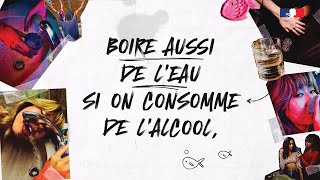
Boire aussi de l'eau si l'on consomme de l'alcool, C'EST LA BASE

Faire attention à ses potes en soirée, C'EST LA BASE
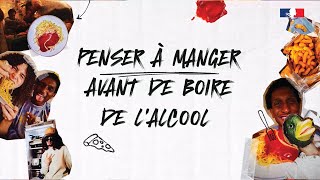
Penser à manger avant de boire de l'alcool, C'EST LA BASE

Motiver tes potes à moins consommer, C'EST LA BASE

Appeler direct les secours si ton pote est en bad, C'EST LA BASE
Support and prevention resources available to everyone
Alcohol Info Service and Drug Info Service are national resources providing information, guidance, and personalized support, available to everyone 7 days a week from 8 a.m. to 2 a.m. via the internet or by phone (anonymous and toll-free from both landlines and cell phones):
www.alcool-info-service.fr - 0 980 980 930
www.drogues-info-service.fr - 0 800 23 13 13
1 Drugs at Age 17 – Analysis of the 2022 ESCAPAD Survey. Trends 155, OFDT. March 2023.
2 Obradovic I., Perceptions, motivations, and patterns of drug use among adolescents, OFDT Trends, December 2017.
3 Kuntsche, E., Rossow, I., Simons-Morton, B., Bogt, T. T., Kokkevi, A., and Godeau, E. (2013), “Not Early Drinking but Early Drunkenness Is a Risk Factor for Problem Behaviors Among Adolescents from 38 European and North American Countries.” Alcohol Clin Exp Res, 37: 308-314.
4 Waller R, Murray L, Shaw D, Forbes E, Hyde L. Accelerated alcohol use across adolescence predicts early adult symptoms of alcohol use disorder via reward-related neural function. Psychological Medicine April 2018.
5 M-A. Douchet, Paul Neybourger. Alcohol and Social Gatherings Among Adolescents and Young Adults - Trends 149 – OFDT – April 2022.












